Greetings! Happy National Wife Day to those celebrating.
Let’s get into today’s top stories.
Forwarded this email? Subscribe to PM Daily below:
SPONSORED SECTION
Sponsor PM Daily! Unlike other free daily newsletters, PM’s ad model works differently: 1. one single sponsor slot per issue; 2. 100% share of voice (SOV) guaranteed; 3. higher return on ad spend (ROAS) from your first placement.
No-brainer, little risk, high upside. Q3 slots are filling up quickly! Reach our rapidly scaling, high-intent, vetted premium audience by replying to this email right now.
🌎 GLOBAL NEWS
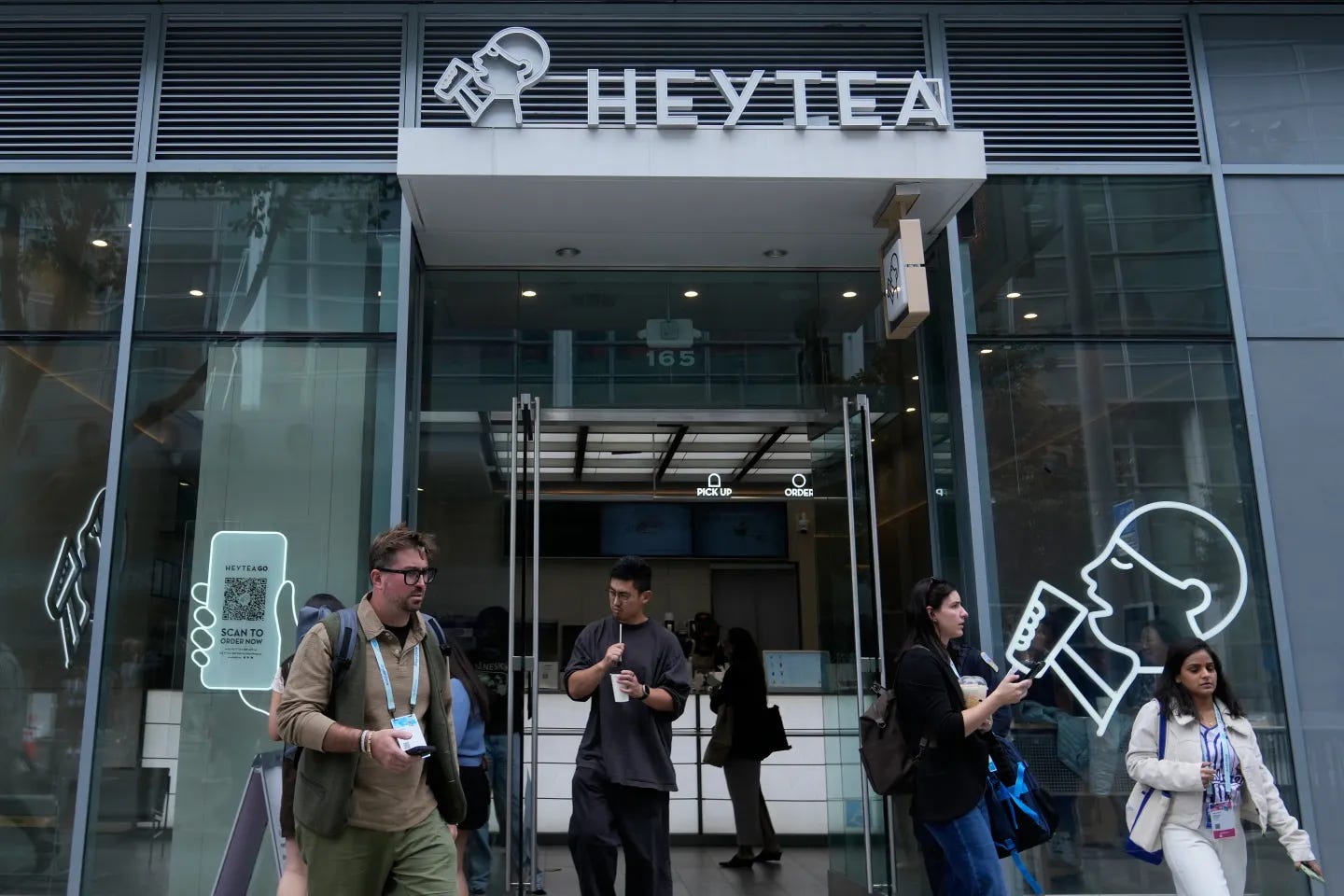
🇨🇳 Fast food becomes a two-way bridge between America and China. American restaurant chains are accelerating expansion in China as Chinese food and beverage brands push deeper into America. The traffic cuts across disputes over tariffs, technology and Taiwan. Market researcher Yaling Jiang calls the trend consumer-led “gastrodiplomacy.” Church’s Texas Chicken recently opened its first Shanghai restaurant and plans at least 600 more across China. Wendy’s ($WEN) expects 1,000 Chinese restaurants over the next decade. McDonald’s ($MCD) plans 1,000 openings this year and 10,000 locations there by 2028. Burger King owner Restaurant Brands International ($QSR) expects the chain’s Chinese footprint to triple to 4,000 by 2035. KFC already has about 13K restaurants in China, versus roughly 3,750 in America. American operators increasingly rely on Chinese partners and localized menus to compete. Starbucks ($SBUX) sold a 60% stake in its China operation to a Chinese investment firm this year. The exchange now runs both ways. Mixue Group (HKEX: 2097), with more than 53K locations globally, opened its first three American stores in December and plans at least two dozen more. Heytea has 40 American locations, while Luckin Coffee (OTC: LKNCY) has 20 in New York. At least nine mainland Chinese chains have entered America since 2023. Chinese brands often compete aggressively on price as they test whether novelty becomes loyalty. America accounts for roughly one-third of global restaurant revenue despite having about 4% of the world’s population. Politics may harden, but burgers, tea and fried chicken keep crossing the Pacific anyway.
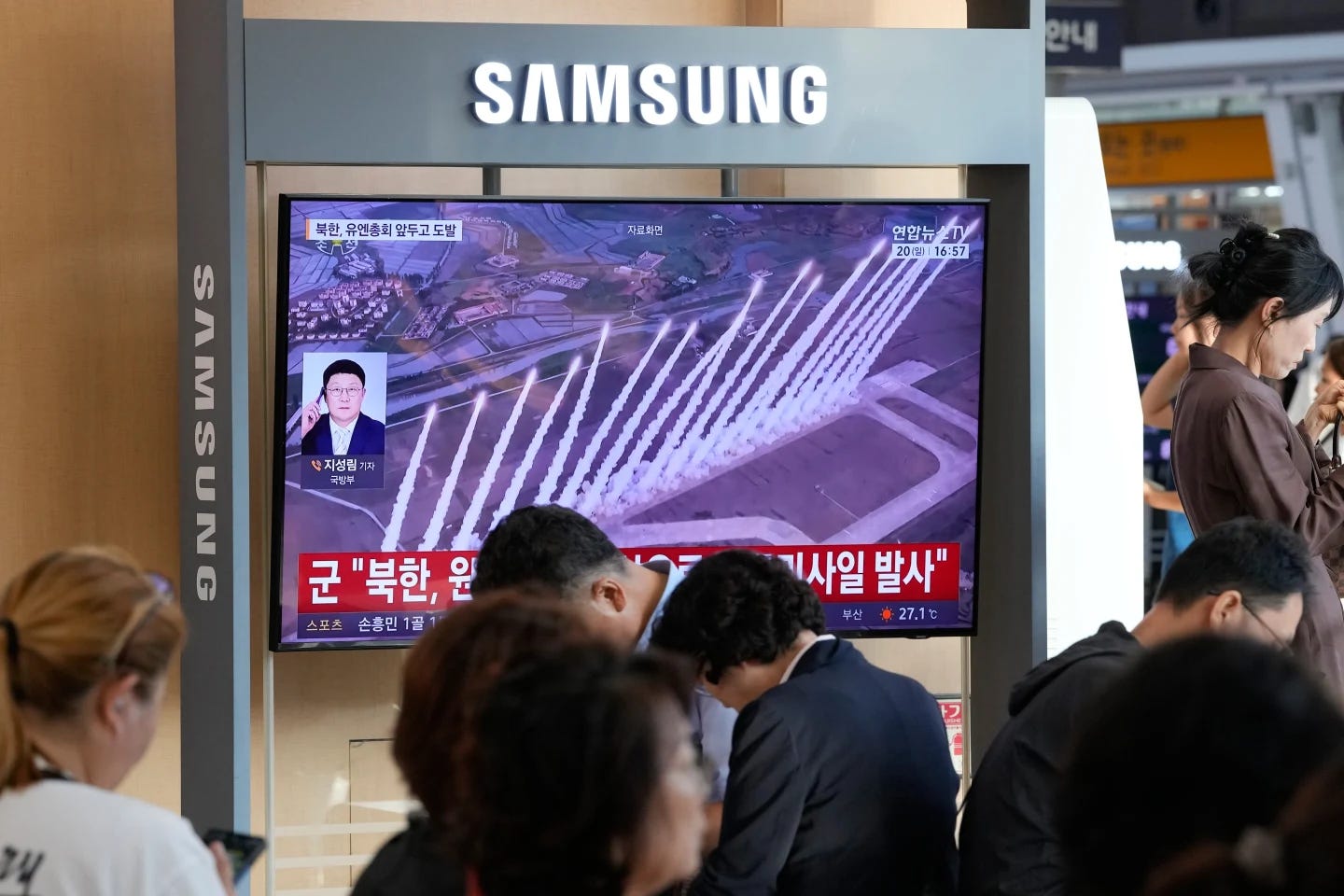
🇰🇵 North Korea fires two ballistic missiles toward the sea. North Korea launched two short-range ballistic missiles from its eastern coastal Wonsan area, according to South Korea’s military. The launches occurred about three hours apart. The first missile traveled roughly 450 kilometers. The second flew more than 600 kilometers. Both landed in waters east of the Korean Peninsula. Japan’s Defense Ministry detected a suspected missile outside Japanese territorial waters. South Korea’s presidential office urged Pyongyang to halt launches prohibited by United Nations Security Council resolutions. The tests came days after North Korea threatened to strengthen its nuclear deterrent in response to what it calls American hostility. President Trump reduced the annual Ulchi Freedom Shield exercise with South Korea last month in an apparent effort to reopen diplomacy with North Korean leader Kim Jong Un. Kim’s sister and senior official Kim Yo Jong dismissed the change as insufficient. North Korea subsequently fired about 10 short-range ballistic missiles after another allied exercise. Kim Yo Jong also criticized the recent Pacific Vanguard maritime drill involving America, South Korea, Japan, Australia, New Zealand and Canada. Pyongyang says such exercises are rehearsals for aggression. Earlier this month, North Korea staged its own live-fire drill involving missiles, artillery and drones. Kim has expanded his nuclear arsenal since diplomacy with Trump collapsed in 2019. South Korean President Lee Jae Myung says renewed American-North Korean talks could improve prospects for peace. The latest launches show diplomatic signals and weapons demonstrations continuing on parallel tracks.
🇺🇸 LOCAL NEWS
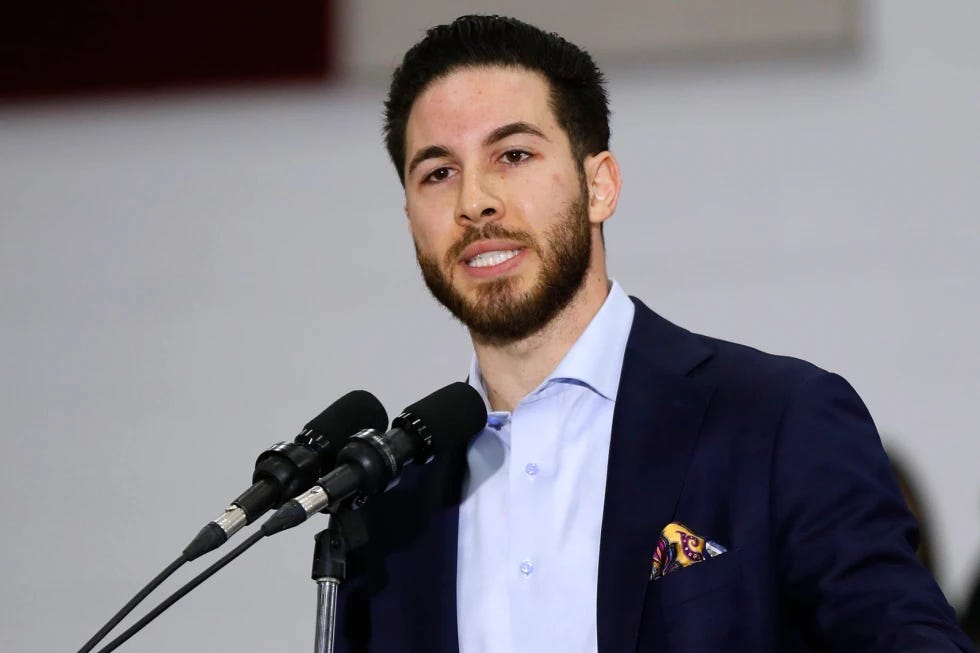
🏛️ Dearborn fights lawsuit alleging religious favoritism. Dearborn, Michigan, is defending itself against a federal lawsuit accusing the city and Mayor Abdullah Hammoud of favoring Muslim holidays over Christian and Jewish observances. Plaintiff Margot Cleveland, a journalist for The Federalist, seeks unspecified damages and constitutional relief. Her complaint says Dearborn spent $1.5K on Ramadan banners and $5K on a crescent-moon installation in Peace Park. It also cites Ramadan-themed shirts sold by the police department. The lawsuit says comparable recognition was not given to Easter or Passover. Dearborn responded that it serves residents fairly regardless of faith or background. City officials said attacks on Dearborn increasingly stem from its diversity and “welcoming nature.” The city has more than 100K residents and a majority Arab American population. The complaint also revisits a September 2025 City Council dispute between Hammoud and local pastor Ted Barham. Barham criticized the naming of a street after Osama Siblani. Hammoud responded that Barham was not welcome in the city and said he would stage a parade when the pastor left. Hammoud later said his remarks targeted one individual whom he considered a bad-faith actor, not Christians or Jews generally. Cleveland says the city ignored her requests for comparable recognition of other faiths. The lawsuit alleges violations of the First Amendment and Fourteenth Amendment. Those allegations have not been adjudicated. The case now puts Dearborn’s holiday displays, mayoral rhetoric and equal-treatment obligations before a federal court, where the city says its record is inclusive.
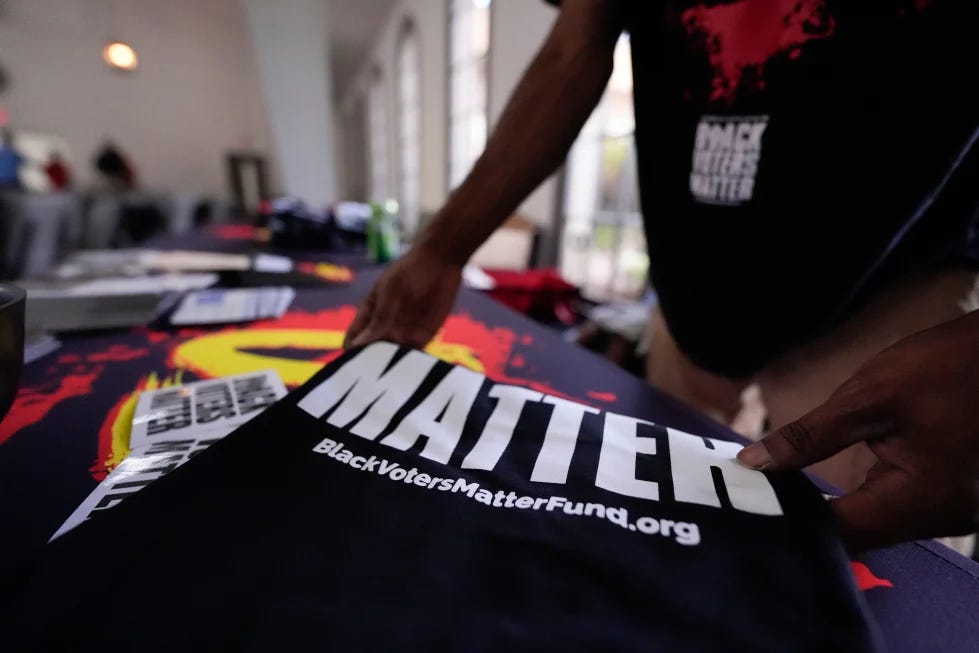
🗳️ Voting groups warn funding gaps could weaken midterm outreach. Several large left-leaning voter-engagement and racial-justice organizations say funding shortfalls are forcing staff cuts and smaller turnout programs as voting begins. Democratic strategists worry the pullback could reduce registration, persuasion and voter-protection work. America Votes, a coordinating hub for more than 400 progressive groups, says its funding is well below its 2022 midterm level. A July memo circulated among Democratic fundraisers said comparable organizations had raised nearly 40% less than at the same point in the 2018 and 2022 cycles. The shortfall has hit groups focused on voters of color especially hard. Some donors have shifted money toward legal organizations challenging President Trump’s administration. Others have pulled back from liberal causes after the 2024 election or cited fear of political scrutiny. Groups serving Black, Latino, rural and younger voters have reduced staffing and field operations. The Democratic National Committee (DNC) says it is making major investments in organizing and voter protection. Allied organizations say those investments do not erase the broader nonprofit funding gap. The Latino-focused Vamos a Votar coalition sought $27.5M this year and still needed $5.4M for work across 10 states and 17 House districts. Some groups are substituting AI tools for in-person voter guides and multilingual outreach. Others are partnering with ride-sharing companies rather than running buses to polling places. Social-media partnerships are also replacing some field organizing. The funding crunch is changing both the scale of turnout work and how civic groups attempt to reach voters.
🗂️ MISC

⚖️ AI giants face antitrust lawsuit over coordinated slowdown. A proposed class-action lawsuit accuses Anthropic, OpenAI, SpaceXAI and Google, whose parent is Alphabet ($GOOGL), of coordinating an illegal AI slowdown. The case was filed in federal court in Northern California. Four named plaintiffs say they pay for ChatGPT, Claude, Grok or Gemini subscriptions. They seek to represent a nationwide class of subscribers. They argue coordinated slowing would reduce competition and the value consumers receive. The complaint points to Anthropic CEO Dario Amodei’s September 12th essay urging industrywide cooperation on safety. OpenAI CEO Sam Altman, SpaceXAI CEO Elon Musk and Google DeepMind co-founder Demis Hassabis responded favorably to the proposal. Plaintiffs say that amounted to an unlawful agreement among major rivals. They also cite a July statement from AI-lab employees urging government support for slowing automated development. The lawsuit does not object to any company independently choosing to slow its own work. Its claim is that competitors cannot collectively substitute restraint for market competition without legal authorization. The companies did not immediately respond. Amodei previously acknowledged antitrust issues and suggested government mediation or a narrow waiver for safety discussions. Altman has supported a federal safety framework while saying companies need not wait for legislation to improve safeguards. President Trump has rejected calls for broad AI restrictions. Republican Senator Josh Hawley has opposed granting AI companies an antitrust exemption. The case turns AI-safety coordination into a competition-law test. For now, the alleged agreement remains an allegation, not a judicial finding.
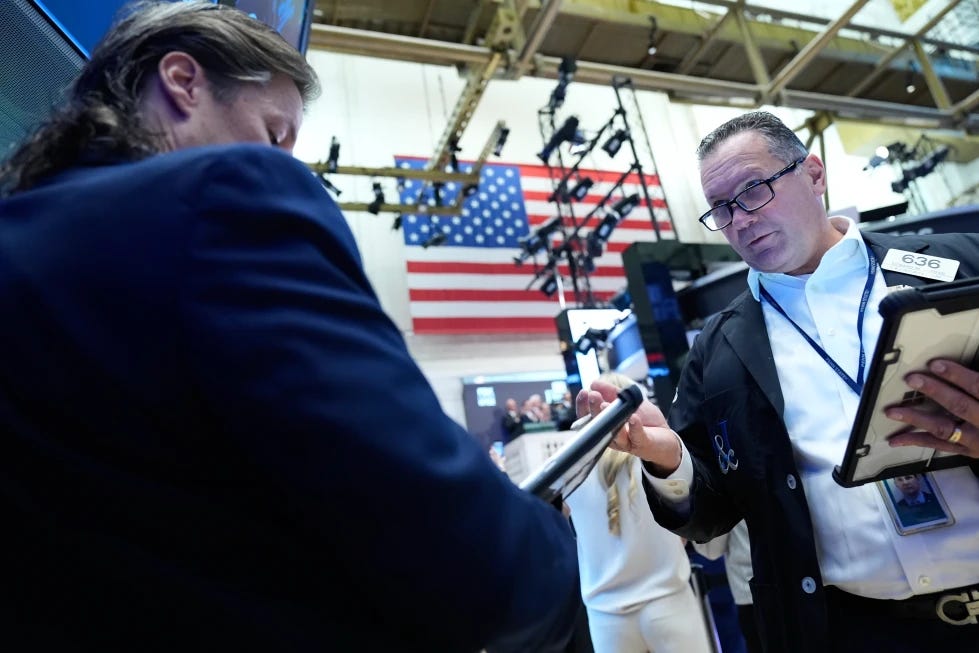
📉 Housing and jobless claims put affordability back on Wall Street’s radar. Investors will receive fresh readings on new-home sales and unemployment claims as high borrowing costs shape the American economy. The government will release August sales data for newly built homes. Economists expect a slight increase from July. That would contrast with August’s decline in existing-home sales. New-home sales track completed houses as well as contracts for homes still under construction. The report therefore offers a direct look at demand facing builders and construction suppliers. Housing remains constrained by rising mortgage rates and high prices. Mortgage costs were already elevated entering 2026 and have climbed further this year. The Iran war has pushed oil prices higher, contributing to rising long-term bond yields. Those yields help lenders set mortgage rates. Higher financing costs can reduce what buyers can afford even when home prices hold steady. Wall Street will also receive the weekly report on unemployment claims. Jobless claims serve as a high-frequency proxy for layoffs. They have remained mostly steady in a historically low range over the past year. The broader labor market has remained resilient despite inflation pressure on households and businesses. Investors will watch whether housing weakness stays concentrated in affordability or begins spilling into employment. Persistent inflation limits the Federal Reserve’s room to ease policy, while weaker housing and hiring would increase pressure for relief. This week’s data will test whether expensive money is cooling activity without breaking the market.
👀 ICMYI
1. Pakistani forces end a 20-hour standoff after a deadly militant attack.
2. Sikh trucker’s stabbing in Wyoming stirs fresh fears in the community.
3. Jehovah’s Witnesses allow some blood products but still ban whole blood.
4. Malaysian coffin maker preserves fading ancient Chinese funeral tradition.
5. America’s 250-year history still teems with scams, hucksters and fraudsters.
6. Chef David Chang hits the road for a new food-centered CNN travel series.
7. Fashion executive resigns after allegedly restraining PETA runway protesters.
8. Florida confirms a dengue death amid one of its worst recent outbreaks.
9. Warmer weather helps West Nile spread farther and longer across Italy.
10. Huawei unveils new AI chip systems as it intensifies rivalry with Nvidia.
🗣️ SHARE PM DAILY
Please share PM Daily with a friend!
✍️ FEEDBACK
Feel free to reply with your candid feedback.
PM reads and responds to every single email.
That’s all for today! Hope you liked this issue.
Much obliged and many thanks for reading.
See you tomorrow, same newsletter. Onward!