Greetings! Happy Batman Day to those celebrating.
Let’s get into today’s top stories.
Forwarded this email? Subscribe to PM Daily below:
SPONSORED SECTION
Sponsor PM Daily! Unlike other free daily newsletters, PM’s ad model works differently: 1. one single sponsor slot per issue; 2. 100% share of voice (SOV) guaranteed; 3. higher return on ad spend (ROAS) from your first placement.
No-brainer, little risk, high upside. Q3 slots are filling up quickly! Reach our rapidly scaling, high-intent, vetted premium audience by replying to this email right now.
🌎 GLOBAL NEWS
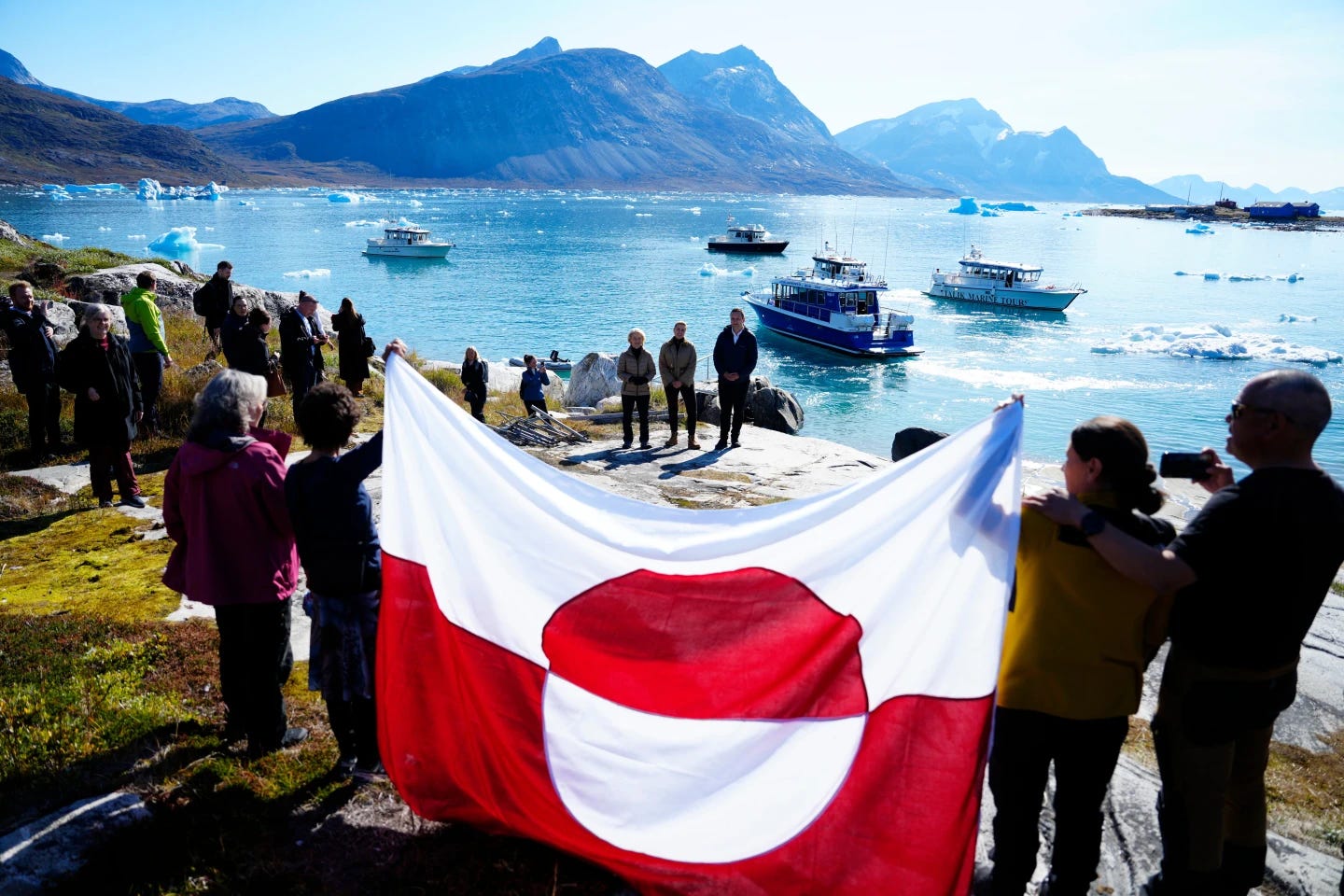
🇬🇱 Denmark cautiously welcomes Greenland security deal. Denmark’s government and Greenland’s leaders are cautiously welcoming an agreement announced by President Trump that would expand American military activity on the Arctic island while leaving Greenland under Danish control. The deal follows months of negotiations among American, Danish and Greenlandic officials. Greenland has about 56K residents and remains a semiautonomous part of the Kingdom of Denmark. Trump said the agreement gives America permanent control over security needs there. Denmark and Greenland have not publicly confirmed all of his description. Prime Minister Mette Frederiksen’s office says the pact is expected to be signed at the United Nations General Assembly. Danish and Greenlandic parliamentary action is still required before it can take effect. Denmark already allows American forces in Greenland under a 1951 defense treaty. America still operates Pituffik Space Base for missile warning, missile defense and space surveillance. A State Department official said the new pact would bar non-North Atlantic Treaty Organization (NATO) bases and restrict adversarial investment. The official also said China and Russia would be prevented from establishing bases. Greenlandic leader Jens-Frederik Nielsen said the agreement could strengthen security and development. Foreign Minister Múte B. Egede said an agreement was finally within reach. North Atlantic Treaty Organization Military Committee chair Adm. Giuseppe Cavo Dragone welcomed the agreement in Copenhagen. Danish Foreign Minister Lars Løkke Rasmussen expressed hope that months of uncertainty would end. The final text remains unpublished, leaving major details about scope, enforcement and additional American facilities unresolved.
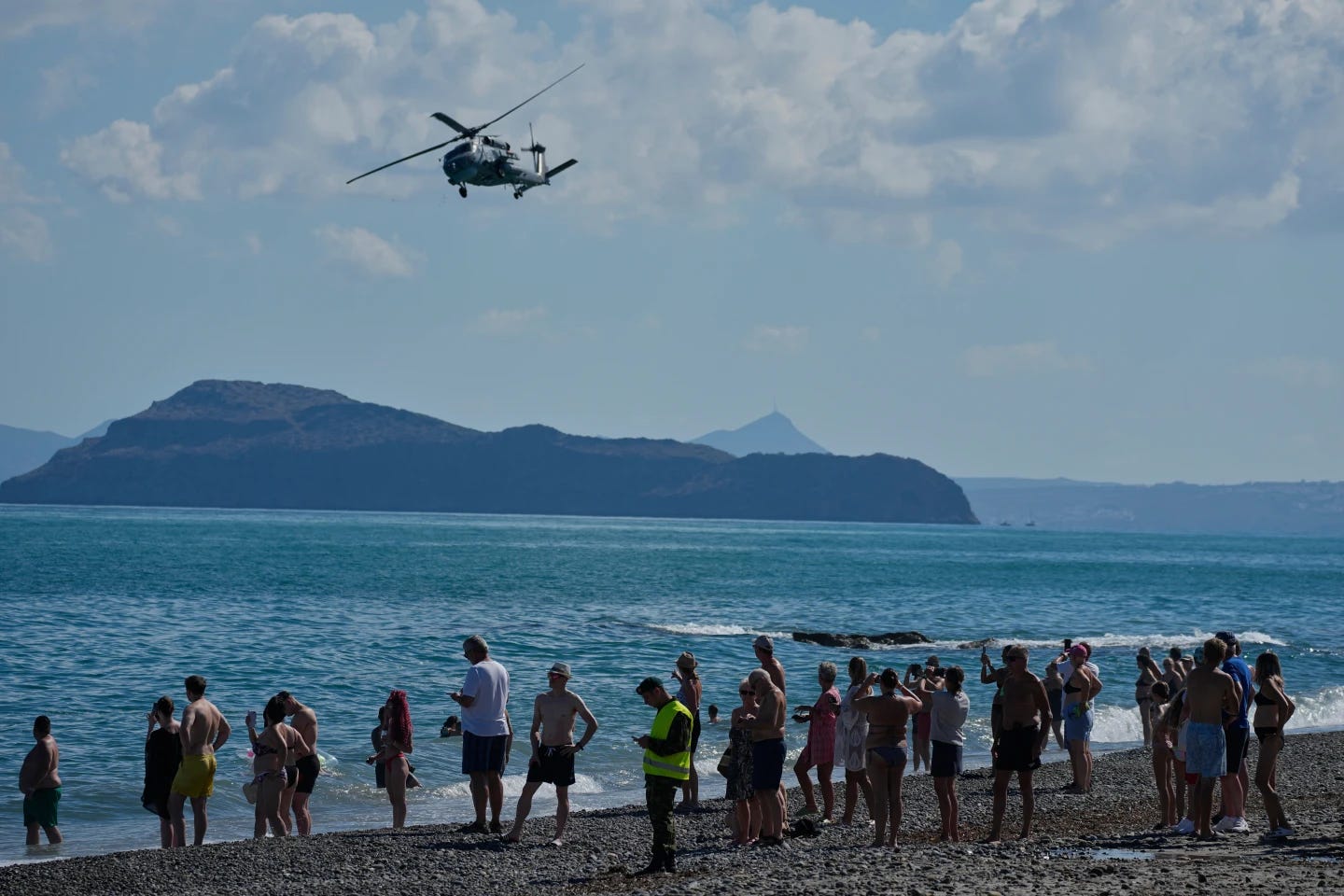
🇬🇷 Tourists watch war games unfold on a beach in Crete. Vacationers on the Greek island of Crete found themselves beside a major multinational military exercise as helicopters, jets and landing craft operated just beyond their sunbeds. The annual Medusa 15 drill was led by Greece and Egypt near Maleme, outside Chania. Marines and special forces practiced fast-boat landings through colored smoke. Drones simulated attacks while aircraft swept overhead. Greek military police established a cordon to keep beachgoers away from the exercise zone. The beachfront phase lasted about an hour. Tourists from nearby hotels watched from roughly 50 meters away. British vacationer Louise Carr said she had not expected the drill’s scale. France, Italy and Cyprus also participated in exercises that began September 10th. Egypt deployed the helicopter carrier Gamal Abdel Nasser. Serbia, the United Arab Emirates, Bahrain and Mozambique sent observers. The Italian Navy frigate Luigi Rizzo also joined the activity. The exercise began September 10th and culminated with the amphibious display witnessed by vacationers. Greece and Egypt have made Medusa an annual platform for increasingly visible operational cooperation. The drills come as Mediterranean governments deepen defense cooperation amid wars and economic shocks. Greece signed a €3B, roughly $3.5B, agreement with Israel in August for the Achilles Shield air-defense system. Turkey, Pakistan and Saudi Arabia separately signed a major defense agreement weeks earlier. Regional governments are increasingly building overlapping security partnerships as questions grow over deterrence, energy routes and America’s future role around the Mediterranean.
🇺🇸 LOCAL NEWS
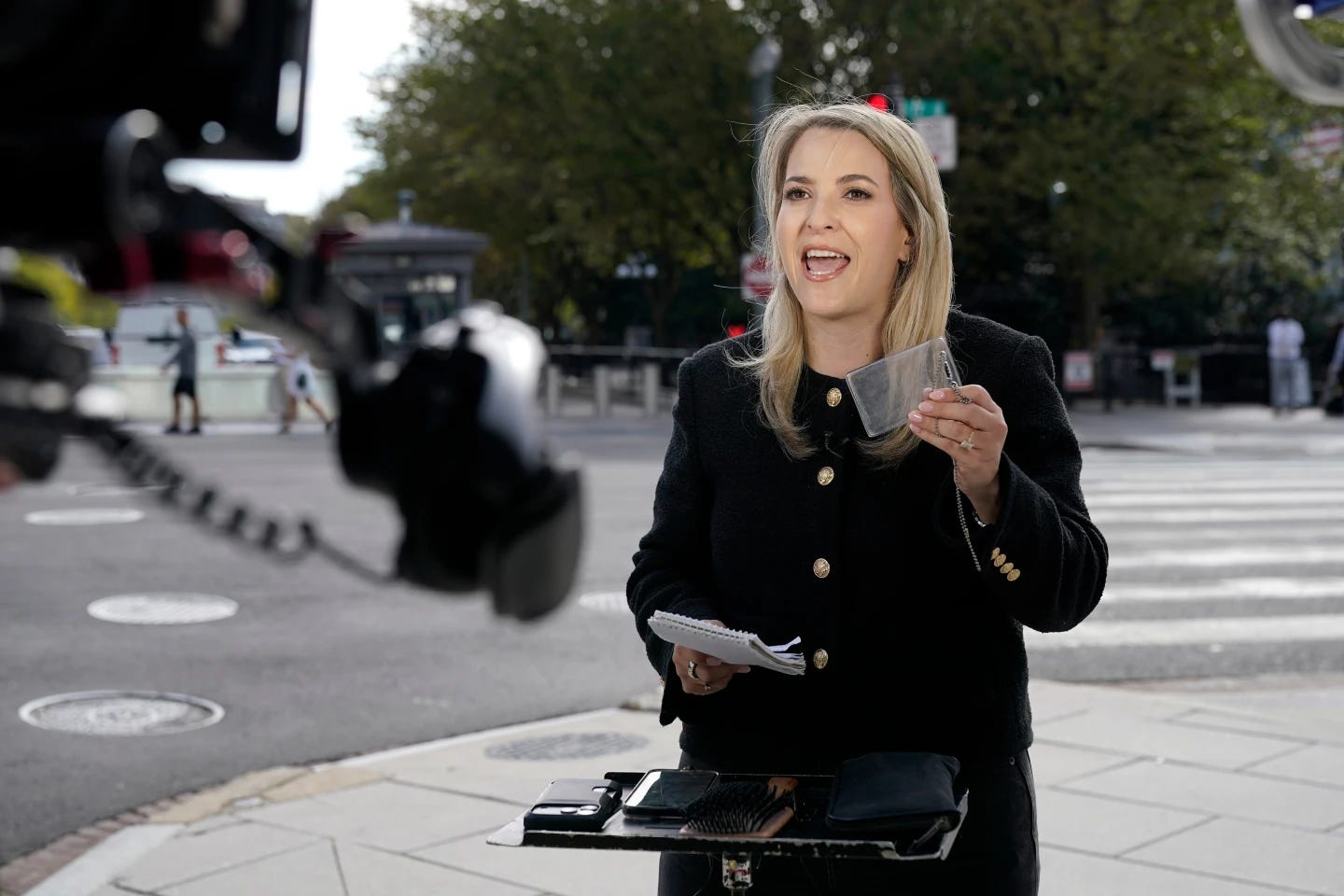
🎙️ CNN, MS NOW and Politico reporters barred from White House. Journalists from Cable News Network (CNN), MS NOW and Politico were denied White House access after President Trump announced a ban on the three organizations over coverage he called “fake news.” CNN senior White House reporter Betsy Klein and MS NOW reporter Akayla Gardner reported from outside the complex after being turned away. Politico White House reporter Cheyenne Haslett was also denied entry. Her credential was confiscated. Klein likewise displayed an empty credential holder after hers was taken. Trump announced the restrictions after criticizing the outlets’ reporting. Politico editor-in-chief Jonathan Greenberger said the organization would defend its First Amendment rights. CNN said it would continue its work holding government institutions accountable. MS NOW said it would take necessary steps to defend independent journalism and press access. The White House action comes amid broader disputes between the administration and news organizations during Trump’s second term. Those conflicts have included lawsuits, regulatory actions and restrictions involving particular outlets or reporters. Network correspondents normally maintain weekend coverage when the president is in Washington or at nearby Camp David. Trump was at Camp David when the journalists were turned away. Politico reporters are not typically stationed at the White House on Saturdays. The immediate dispute concerns physical access rather than a prohibition on publishing or broadcasting. The dispute places White House credentialing and First Amendment protections at the center of another press-access conflict.
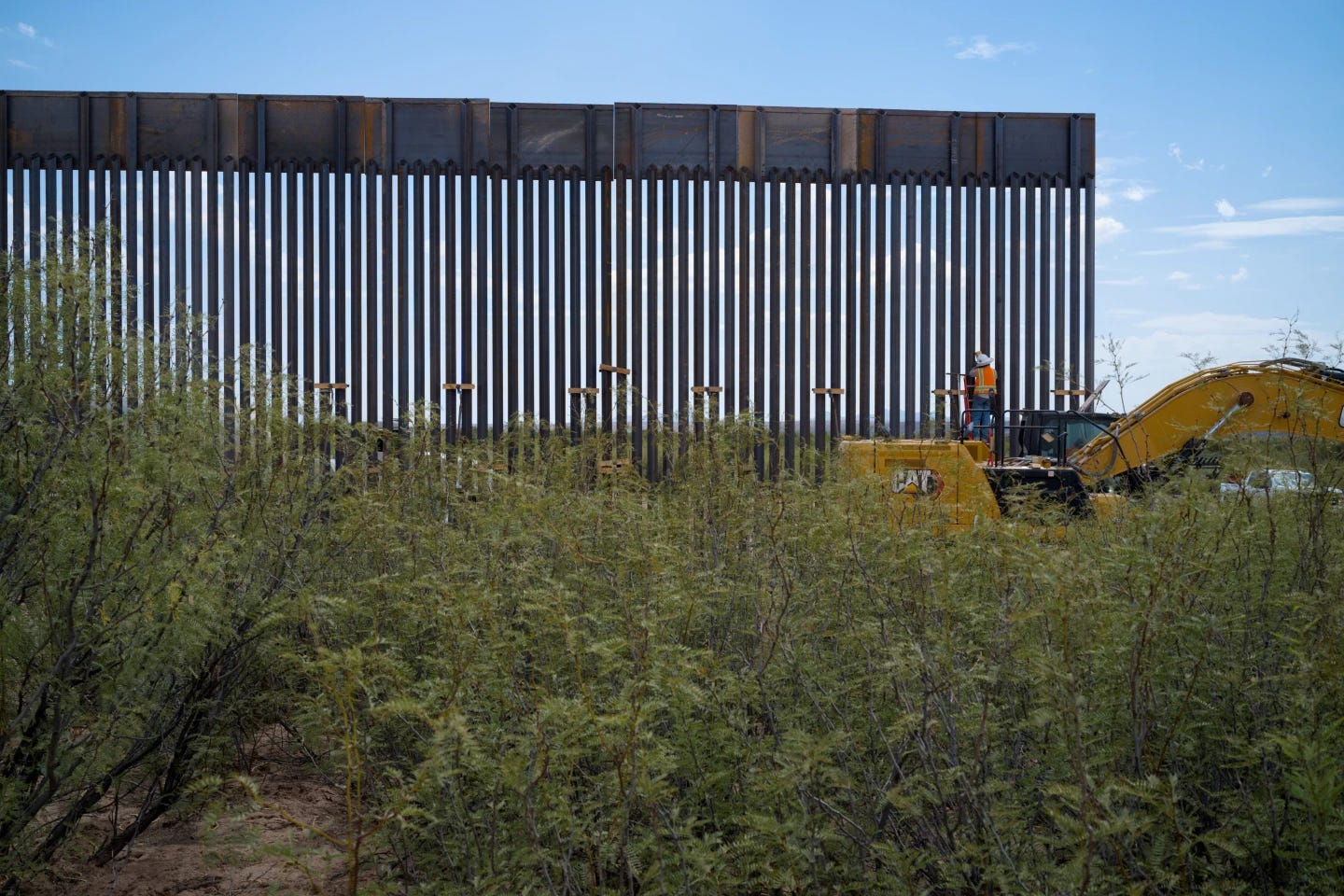
🧱 Border wall construction begins in Texas’ Big Bend region. President Trump’s administration has started installing border-wall panels in west Texas, opening the first major construction push in the remote Big Bend region. Customs and Border Protection (CBP) says work is underway along a 47-mile stretch of Hudspeth County known as Big Bend 1. The first panels were erected September 15th. They are 30 feet tall. Big Bend 1 is one of five project areas across a roughly 500-mile region extending from south of El Paso to Lake Amistad. The work forms part of a $46B federal plan combining walls, vehicle barriers, patrol roads and surveillance technology. CBP says construction across the southern border now averages 12 miles of barriers per week. That pace is double the rate agency leadership cited earlier this year. CBP says 200 miles of new barriers have been built since Trump returned to office. The Hudspeth County project is separate from proposed construction inside Big Bend National Park. Work there has been temporarily suspended while officials engage opponents. Landowners, ranchers, businesses and environmental groups have organized against projects across the region. Critics argue much of Big Bend is not a high-traffic corridor for unauthorized crossings. Some landowners have refused survey access. Opponents also warn that wall construction could affect private property, wildlife corridors and the region’s protected landscapes. A coalition has also sued to stop portions of the administration’s plans. Construction is nevertheless moving ahead outside the park as legal and local opposition continues.
🗂️ MISC
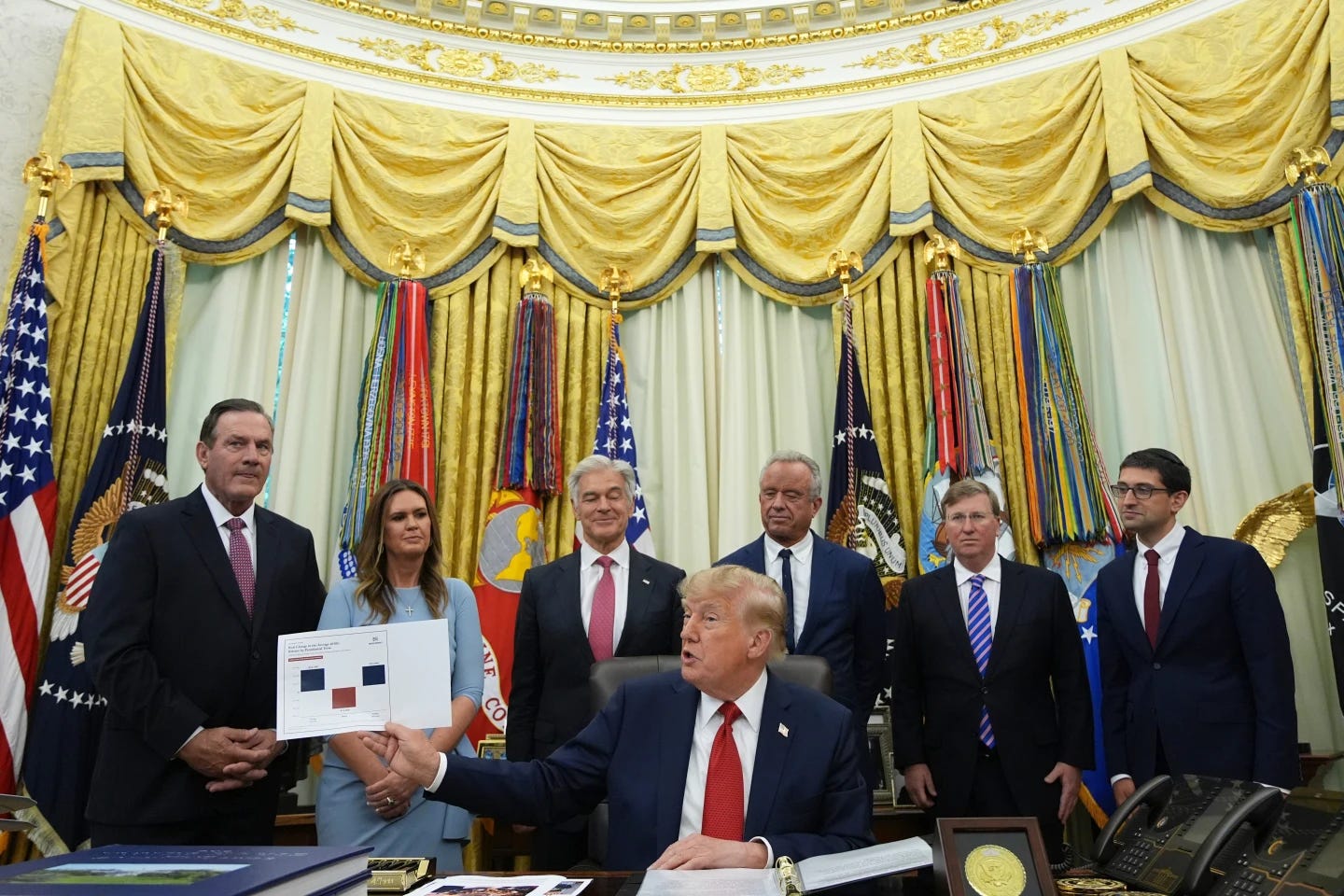
💊 All 50 states join Medicaid drug-pricing model. President Trump says every state will participate in a new Medicaid program designed to lower the net prices of selected prescription drugs to levels paid in certain other countries. The administration calls it the Medicaid GENEROUS model. It applies a version of Trump’s “Most Favored Nation” pricing policy to participating medicines. Medicaid is jointly funded by states and the federal government for people with low incomes. Patients typically pay only nominal prescription copayments, so much of the potential benefit would accrue to government budgets. The administration says states could save billions. Independent experts say the actual savings cannot yet be verified because key pharmaceutical agreements remain confidential. The White House previously estimated its broader drug-price deals could save $529B over 10 years. That figure extends beyond the Medicaid model announced now. Trump said states could redirect savings toward other health priorities. Centers for Medicare & Medicaid Services (CMS) Administrator Mehmet Oz joined the announcement alongside Health and Human Services Secretary Robert F. Kennedy Jr. The rollout comes as health costs remain a major affordability issue. Critics also point to higher insurance costs after enhanced Affordable Care Act subsidies expired. Policy analysts are asking for more detail on participating drugs, negotiated prices and durability. Some advocates say Americans outside Medicaid and Medicare also need lower prices. The agreements themselves have not been made public. The initiative expands the administration’s international-reference-pricing strategy nationwide, but its eventual fiscal impact will depend on terms that remain largely undisclosed.
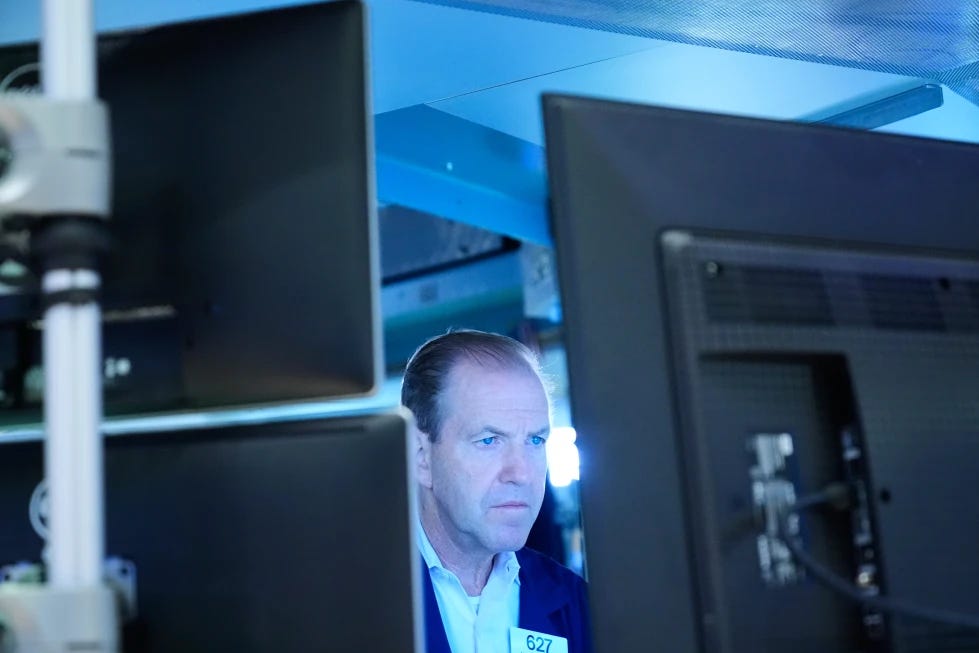
📈 Stocks finish mixed as bond yields rise and oil swings. Wall Street closed an uneven session with elevated Treasury yields and oil prices continuing to pressure investors. The Standard & Poor’s 500 (S&P 500) rose 0.2% to 7,650.50. The Dow Jones Industrial Average fell 95.40 points, or 0.2%, to 51,682.64. The Nasdaq composite gained 0.4% to 26,552.55. Most individual stocks declined. The 10-year Treasury yield climbed to 5% from 4.94% after crossing 5% earlier in the week for the first time since 2023. Higher yields increase borrowing costs for households, businesses and the federal government. Inflation remains above 3% by several measures. The Iran war has added pressure through higher energy prices. Brent crude briefly fell below $102 before settling at $103.87 per barrel, down 0.9%. It had approached $110 earlier in the week and traded only slightly above $70 in July. Regular American gasoline averages $4.47 per gallon, versus $3.20 a year ago. Diesel has reached a record $6.45 per gallon. Those fuel costs feed directly into freight bills and eventually into prices for everyday goods. The broader market also posted its second consecutive weekly decline despite the index-level gains. Nucor ($NUE) fell 6.3% after issuing a profit outlook below analysts’ expectations. General Motors ($GM) dropped 5.1%, while Qualcomm ($QCOM) fell 5.8%. Coinbase Global ($COIN) jumped 11.7% and Robinhood Markets ($HOOD) gained 9.1%. The mixed close left markets balancing resilient risk appetite against expensive credit, stubborn inflation and energy volatility.
👀 ICMYI
1. Saudi Arabia issues Riyadh air raid alert amid regional escalation.
2. Nobel laureate Narges Mohammadi says Iranians pay war’s price.
3. Russian election observer evidently collapses during police arrest.
4. China’s oil buying helps restrain prices despite the Iran war.
5. Cuba suffers another nationwide blackout affecting millions.
6. Clancy holdout juror says he had no doubt she killed her children.
7. Telehealth firms keep exposing customers’ sensitive medical data.
8. Humpback whale swims 60 miles inland in a California river.
9. AI labs say recursive self-improvement may be approaching.
10. Dutch riot police disperse violent far-right protest in The Hague.
🗣️ SHARE PM DAILY
Please share PM Daily with a friend!
✍️ FEEDBACK
Feel free to reply with your candid feedback.
PM reads and responds to every single email.
That’s all for today! Hope you liked this issue.
Much obliged and many thanks for reading.
See you tomorrow, same newsletter. Onward!