Greetings! Happy National Peanut Day to those celebrating.
Let’s get into today’s top stories.
Forwarded this email? Subscribe to PM Daily below:
SPONSORED SECTION
Sponsor PM Daily! Unlike other free daily newsletters, PM’s ad model works differently: 1. one single sponsor slot per issue; 2. 100% share of voice (SOV) guaranteed; 3. higher return on ad spend (ROAS) from your first placement.
No-brainer, little risk, high upside. Q3 slots are filling up quickly! Reach our rapidly scaling, high-intent, vetted premium audience by replying to this email right now.
🌎 GLOBAL NEWS
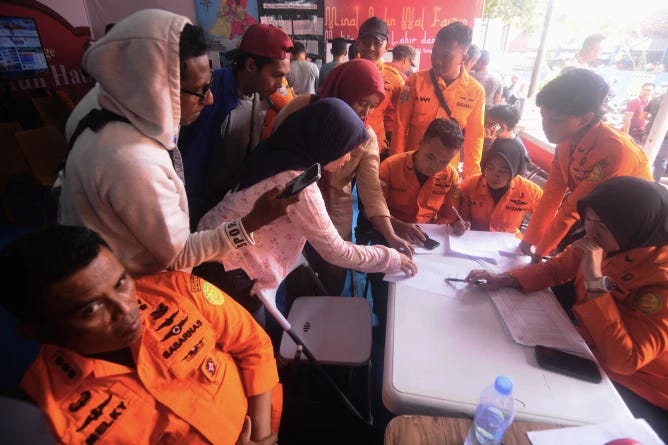
🇮🇩 Indonesia searches for 129 missing after ferry capsizes. Indonesian rescuers expanded a major Java Sea search after the Virgo Transport 8 overturned in rough weather with more than 240 people aboard. At least 108 people have been rescued and six bodies recovered, leaving at least 129 still missing. The ferry was traveling from Surabaya in East Java to Banjarmasin in South Kalimantan on Borneo. Its captain reported waves as high as 3 meters before issuing a distress call that said the vessel was listing. Authorities lost contact around 2 a.m. and received confirmation of the emergency about two hours later. Search teams deployed 12 vessels, including four navy ships, alongside two helicopters and passing commercial boats. The ship’s manifest listed 213 passengers and 30 crew members, though Indonesian ferry manifests do not always match the actual number aboard. The 119-meter vessel was also carrying 89 vehicles. Transportation Minister Dudy Purwagandhi said aerial crews found the ferry floating upside down rather than sunk. Rescuers concentrated around the overturned hull while survivors were brought ashore, some exhausted or injured. Hundreds of relatives gathered at Banjarmasin’s Trisakti port, repeatedly checking rescue lists for family members. The ferry was built in Japan in 1987 and sold last year to Indonesian operator PT Virgo Karya Shipping. Indonesia’s geography makes ferries indispensable across its more than 17,000 islands. Repeated maritime disasters have kept questions about vessel oversight, passenger accounting and safety enforcement close behind every rescue effort.
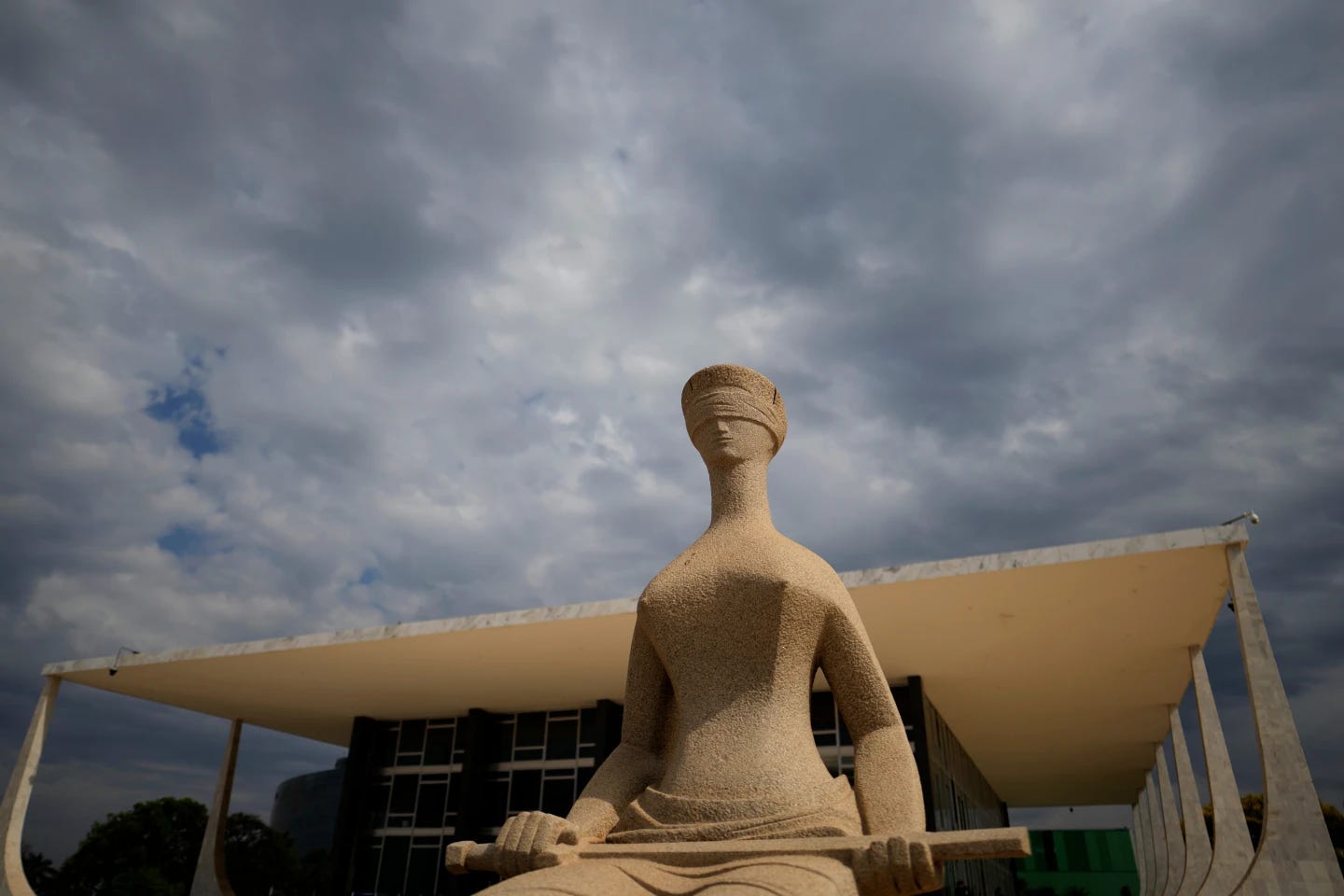
🇧🇷 Brazil probes funding behind Bolsonaro biopic. Supreme Court Justice Flávio Dino unsealed an investigation into financing for “Dark Horse,” a film about former President Jair Bolsonaro, after investigators raised suspicions that money tied to a criminal network helped fund the production. The inquiry lands weeks before Brazil’s October national election, in which Senator Flávio Bolsonaro is challenging President Luiz Inácio Lula da Silva. The senator, Jair Bolsonaro’s eldest son, is separately under investigation for corruption, money laundering and tax evasion. Investigators say he received millions from disgraced banker Daniel Vorcaro connected to financing the film. Dino said evidence had strengthened a theory involving diverted public money from congressional budget amendments and the São Paulo city government. Federal police also targeted Bolsonaro ally and lawmaker Mário Frias. Officers seized documents from Frias and the film’s production company. Frias had sent roughly R$2M, or about $400K, to a nonprofit connected to the project. Investigators suspect funds were routed through irregular subcontractors without proof that contracted services were performed. Dino said there were strong indications that Frias played a central role in the alleged network. He also said the network may have links to the First Command of the Capital criminal organization. Frias denies wrongdoing and says he never directed congressional funds to the film. The case overlaps with wider turmoil surrounding Banco Master and several senior political and judicial figures. The investigation adds another major case to a Supreme Court already dealing with disputes over Banco Master, law enforcement and senior political figures.
🇺🇸 LOCAL NEWS
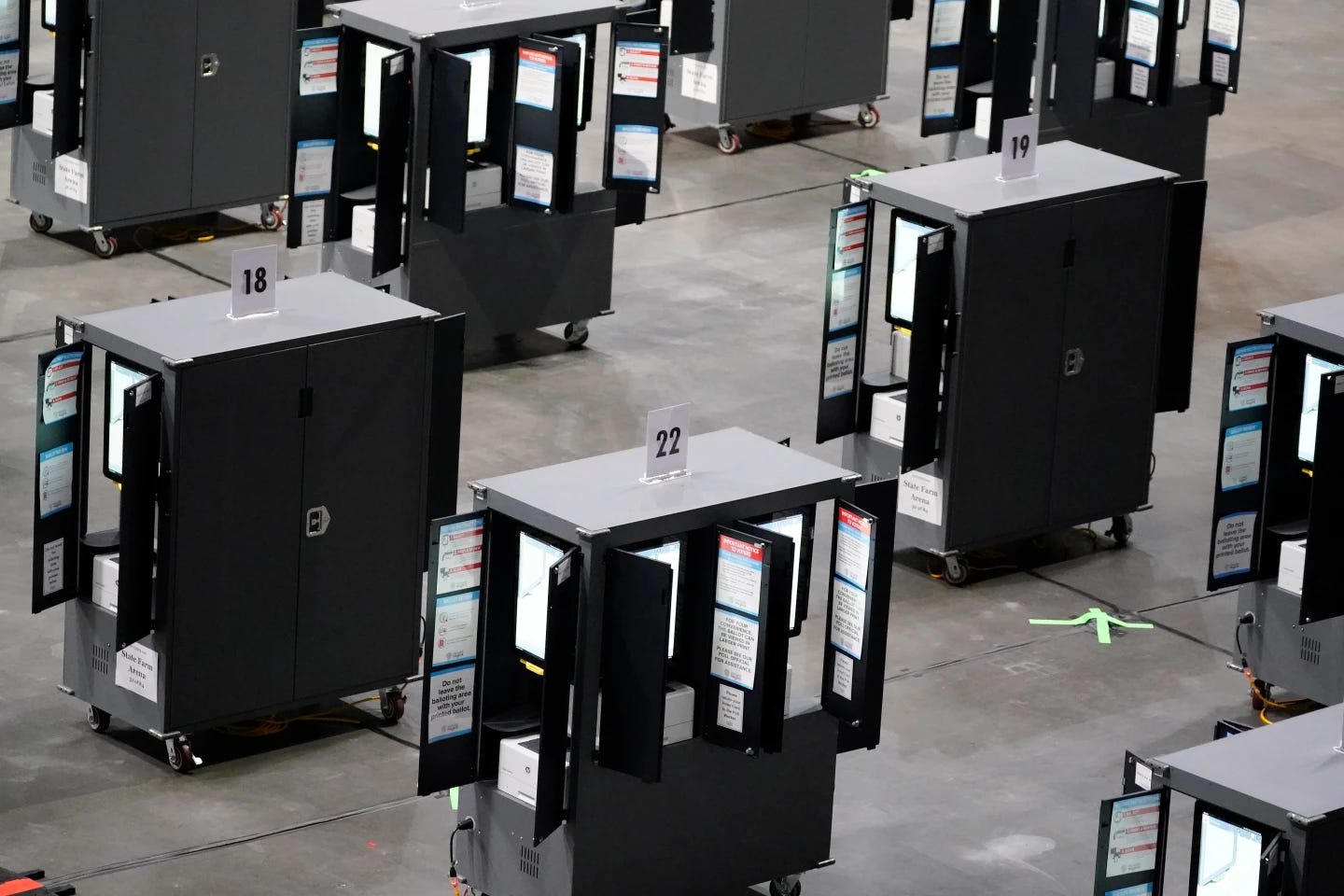
🗳️ Georgia voting flaw puts ballot secrecy under scrutiny. Election-security researchers say a known weakness in Georgia’s voting system can allow someone to connect individual voters with ballots they already cast, raising new concerns as AI makes the process easier to automate. The vulnerability does not alter votes or undermine reported election results. It instead threatens ballot secrecy, which Georgia’s Constitution expressly guarantees. Voters make selections on touchscreen machines that print paper ballots before scanners tabulate them. Those scanners also create electronic ballot images and cast-vote records that are supposed to be randomized. Researchers found that the software can restore those records to the order in which ballots were cast. Publicly available voting records can then narrow which voter corresponds to which ballot. Princeton researcher Max Springer tested the vulnerability using a public AI assistant and records from Georgia’s May primary. He found that the system could reconstruct ballot order and identify additional public records needed for matching. With early-voting lists, scanner logs and precinct check-in records, Springer said most ballots could be linked to specific voters. Other jurisdictions using the same equipment have installed a software fix or restrict access to records needed for exploitation. Georgia uses the system statewide and has not implemented that fix everywhere. State officials say they have taken steps to reduce the risk. Election-security advocates argue the remaining exposure could facilitate coercion, vote buying or legal challenges in a closely watched election year.
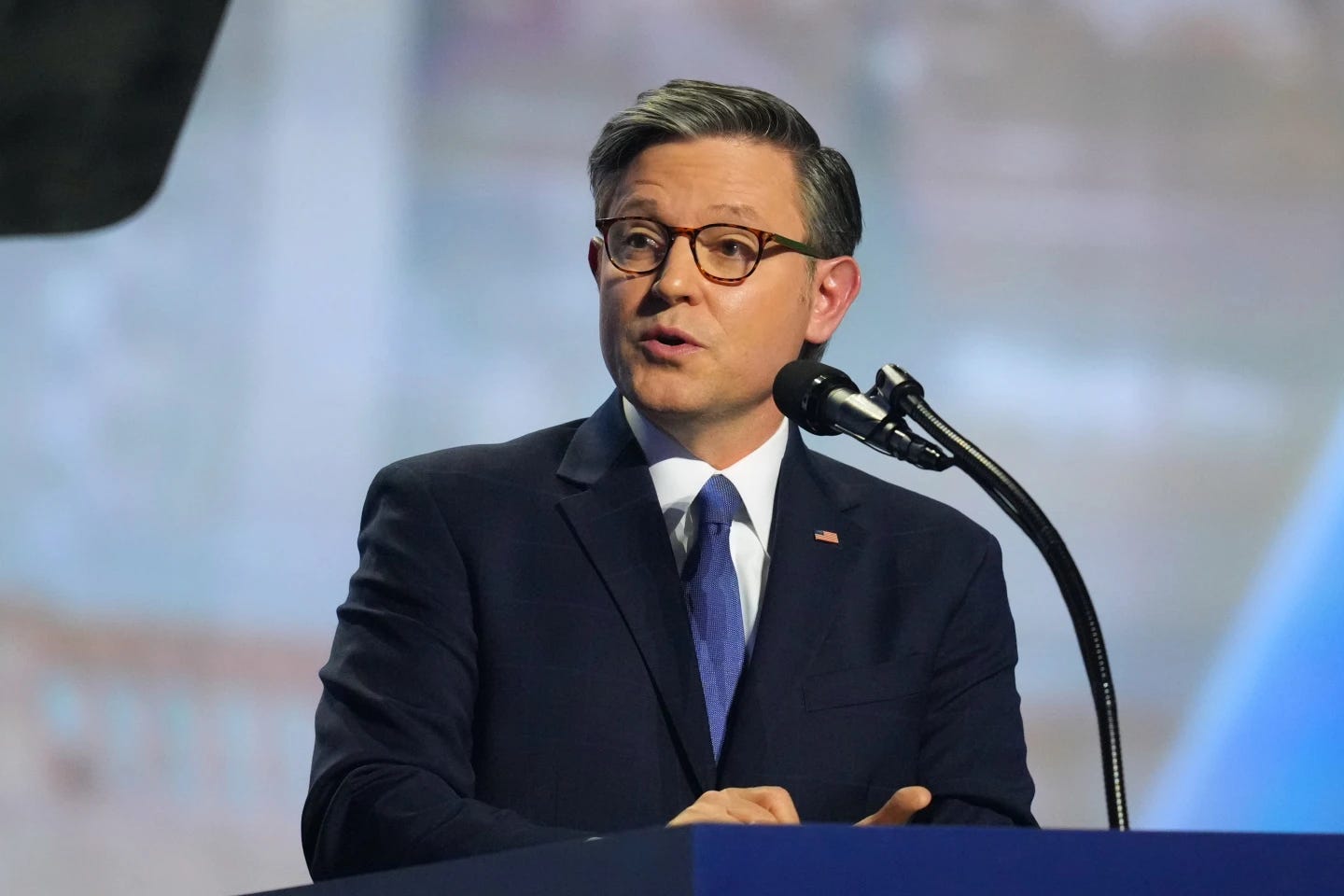
💰 Johnson says President Trump’s $5K dividend requires Congress. House Speaker Mike Johnson said President Trump cannot send $5K payments to American adults without congressional approval, publicly contradicting the president’s suggestion that lawmakers might not need to authorize the proposal. Trump introduced the “Trump Dividend” at the Republican midterm convention in Dallas. He tied the payment to Republicans retaining control of both the House and Senate in November. Trump later said he did not believe Congress would have to approve the checks. Johnson said the opposite, while still promising to help move legislation through the House. Trump then told reporters the $5K payments would happen “100%.” No legislation authorizing the program currently exists. The proposal could cost more than $1T depending on eligibility. America is already running an annual federal budget deficit near $1.8T. The White House has not released detailed eligibility rules or a specific funding mechanism. Trump argues that strong economic performance and federal revenue would make the payments affordable. Johnson said Congress would have to find consensus despite Republicans’ narrow House majority. Any federal payment program of that scale would require lawmakers to determine who qualifies, where the money comes from and how it is distributed. The debate comes as inflation remains elevated, gasoline prices have climbed during the Iran war and wages have struggled to keep pace for many households. Consumer sentiment also remains weak. Until Congress acts, the “Trump Dividend” remains an election-year promise rather than an authorized federal payment.
🗂️ MISC
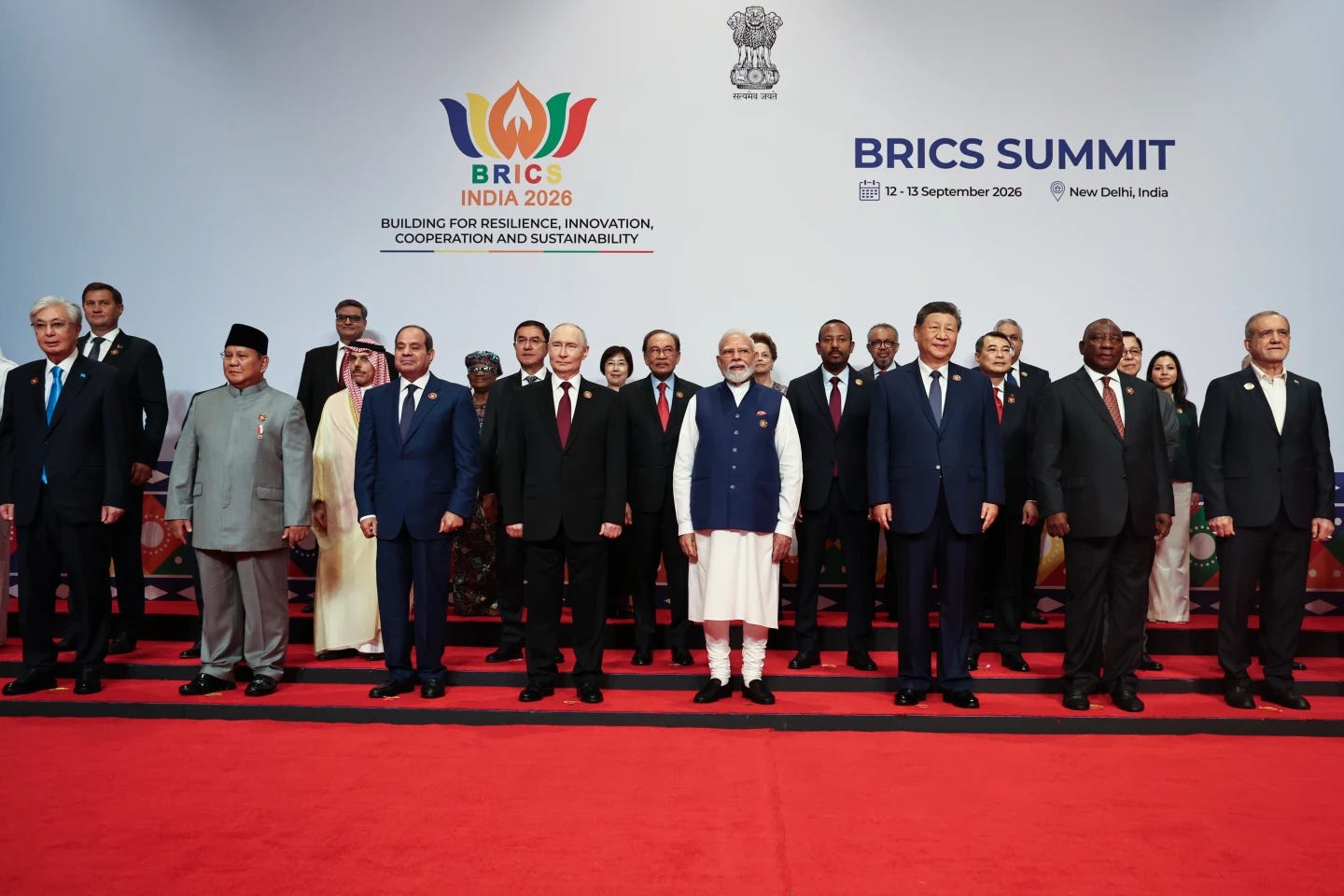
🌐 BRICS warns geopolitical shocks are straining global stability. Leaders of Brazil, Russia, India, China and South Africa (BRICS) and the bloc’s newer members met in New Delhi with wars, supply disruptions and climate pressures dominating the agenda. The group has expanded to 11 countries representing about half of the world’s population. Chinese President Xi Jinping, Russian President Vladimir Putin and Iranian President Masoud Pezeshkian were among the leaders participating. The summit warned that conflicts increasingly spill across borders through energy markets, trade routes and disrupted supply chains. Members also raised concerns about the use of technology and critical minerals as instruments of geopolitical pressure. BRICS agreed to establish an integrated early-warning system for infectious diseases. The proposal is intended to improve preparedness for outbreaks that can spread rapidly across regions. The bloc also called for disputes in the Middle East and Sudan to be addressed through dialogue and diplomacy. Members reiterated support for reforming the United Nations, including the Security Council. They also sought changes at the World Bank and International Monetary Fund to give developing countries greater representation. The declaration opposed unilateral sanctions and criticized rising tariffs and nontariff barriers. BRICS backed wider use of local currencies and stronger cross-border payment systems. Food security, energy, digital infrastructure, AI and climate action were also included in the cooperation agenda. Reaching a common declaration required agreement among members with sharply different interests, including Iran, Saudi Arabia and the United Arab Emirates.
🏦 Federal Reserve decision puts rates back at center stage. Wall Street is heading into a consequential week with the Federal Reserve’s next interest-rate decision and August retail-sales data arriving at the same time. The central bank will conclude its two-day meeting on September 16th. Policymakers could raise the benchmark interest rate again as inflation remains stubbornly above target. Consumer inflation has stayed above 3%, compared with the Federal Reserve’s 2% goal. The war with Iran has added pressure by disrupting oil flows through the Strait of Hormuz. Before the conflict, roughly one-fifth of the world’s oil moved through that passage. Higher crude prices have pushed gasoline costs upward and raised transportation expenses throughout the economy. Those increases reach households directly at the pump and indirectly through more expensive freight. Retail-sales figures for August will offer a fresh measure of whether consumers are still spending despite higher prices and slower wage growth. The Federal Reserve has kept its benchmark rate steady while waiting for clearer evidence that inflation is retreating. Investors nevertheless expect at least one rate increase before year-end. Higher rates could restrain demand and inflation but would also make mortgages, credit cards and business borrowing more expensive. President Trump has pressed the central bank to cut rates instead. A reduction could support growth while risking additional inflation pressure. The coming decision therefore arrives with markets weighing persistent price increases against the economic cost of tighter money.
👀 ICMYI
1. Pennsylvania reports its third death involving measles virus.
2. President Trump considers releasing September 11th records.
3. Deputies respond to trespasser at Kamala Harris’ Malibu home.
4. Judge rules Trump’s planned 50% FEMA staffing cuts unlawful.
5. Alaska drops voter citizenship cases against American Samoans.
6. President Trump’s Queens NYC childhood home sells for $2M.
7. Rybakina beats Sabalenka to win US Open and #1 WTA rank.
8. “Practical Magic 2” opens at No. 1 in theatres with $30M debut.
9. Celine Dion returns to the stage in an emotional Paris concert.
10. Brazilian culture surges via music, fashion and social media.
🗣️ SHARE PM DAILY
Please share PM Daily with a friend!
✍️ FEEDBACK
Feel free to reply with your candid feedback.
PM reads and responds to every single email.
That’s all for today! Hope you liked this issue.
Much obliged and many thanks for reading.
See you tomorrow, same newsletter. Onward!