

In partnership with

Greetings! Happy National Unicorn Day to those celebrating.
Let’s get into today’s top stories.
Master Claude AI (Free Guide)
The professionals pulling ahead aren't working more. They're using Claude.
Our free guide will show you how to:
Configure Claude to be the perfect assistant
Master AI-powered content creation
Transform complex data into actionable strategies
Harness Claude’s full potential
Transform your workflow with AI and stay ahead of the curve with this comprehensive guide to using Claude at work.
SPONSORED SECTION
Sponsor PM Daily! Unlike other free daily newsletters, PM’s ad model works differently: 1. one single sponsor slot per issue; 2. 100% share of voice (SOV) guaranteed; 3. which means higher return on ad spend (ROAS) from your first placement.
No-brainer, little risk, high upside. Q2 slots are filling up quickly! Reach our rapidly scaling, high-intent, vetted premium audience by replying to this email right now.
🌎 GLOBAL NEWS
Source: Associated Press (AP)
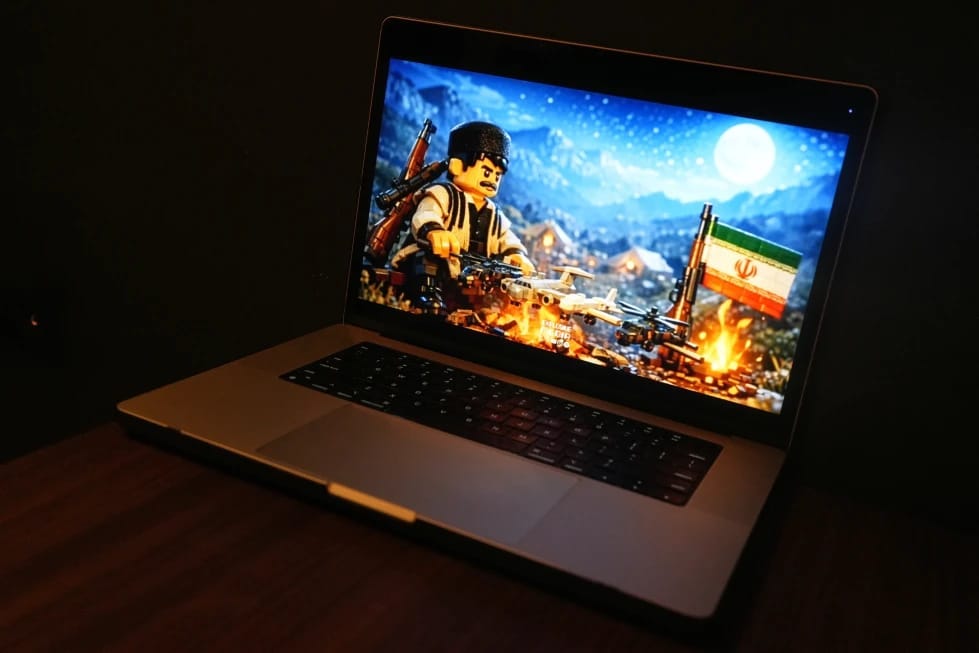
🇮🇷 Memetic warfare is cheap, fast, and culturally fluent. Memetic warfare is the strategic use of memes, short-form visuals, irony, and platform-native jokes to shape public perception faster than formal messaging can. In this war, pro-Iran groups are using artificial intelligence to mass-produce English-language content meant to ridicule Donald Trump and erode support for further escalation. Analysts claim those memes appear linked to groups aligned with Tehran and fit a broader asymmetric strategy of inflicting damage indirectly. The material is not generic. It is steeped in American culture, internet slang, and internal political grievances. Some posts have mocked Trump as old, isolated, and physically frail. Others have pulled in Jeffrey Epstein references, Pete Hegseth’s confirmation spectacle, and Lego-style animation. The point is not battlefield victory but narrative contamination. Tehran does not need to outgun Washington online if it can outmeme it in the feeds where attention is won. Experts state American and Israeli messaging is not matching that effort in the same way, especially toward foreign audiences. Israeli outreach has included AI-enhanced Farsi messaging, but American meme output remains largely domestic in tone and target. Voice of America’s Farsi service is also operating with a skeleton staff after President Trump moved to shut it down. That helps explain why pro-Iran actors are punching above their material weight in the PR contest, speaking fluent American internet at a moment when their opponents are still speaking to themselves. In a war measured partly by reach, the side that understands the joke often gets to frame the grief.
Source: Associated Press (AP)
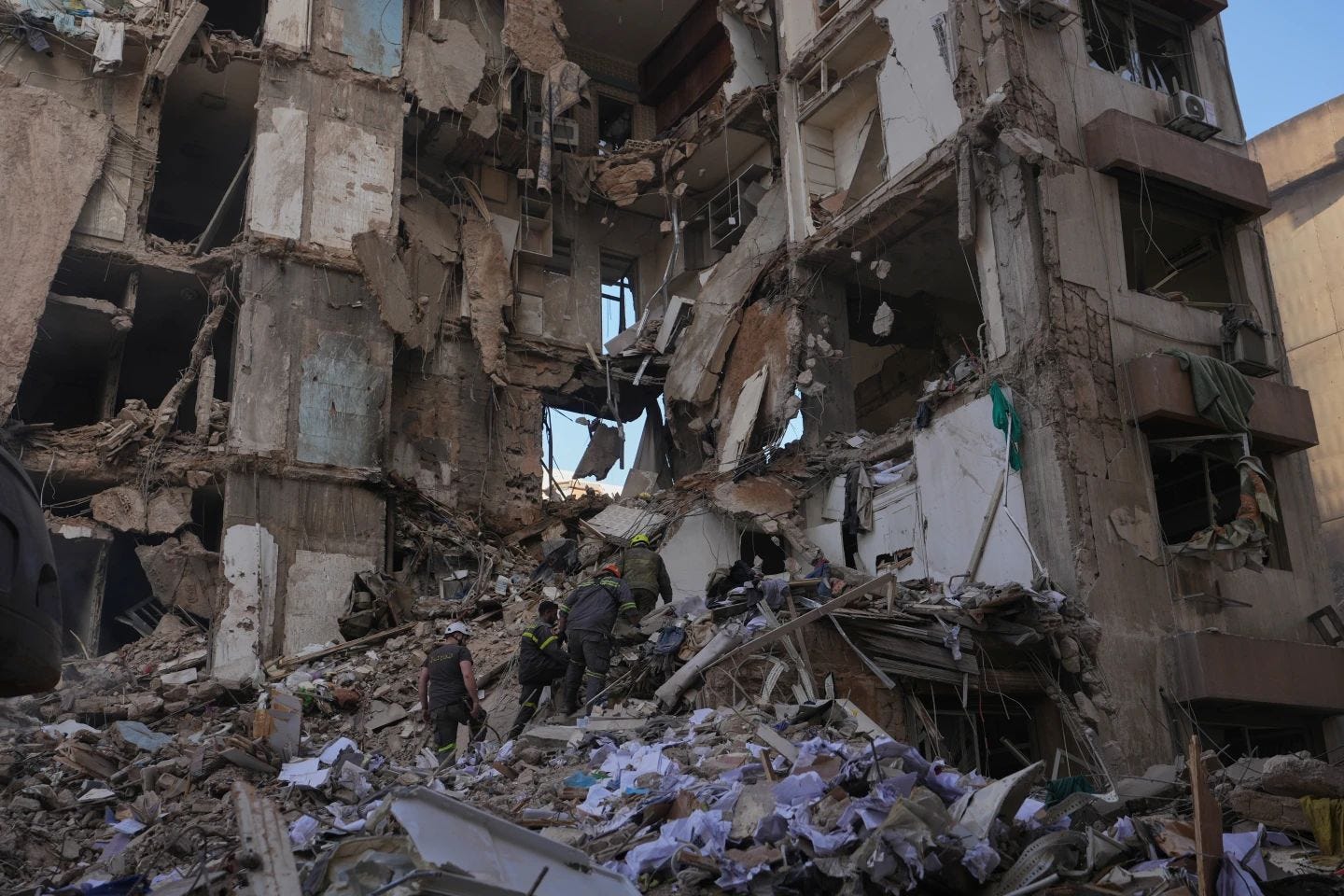
🇱🇧 Lebanon talks are opening under the weight of older crimes. Benjamin Netanyahu says he has authorized direct negotiations with Lebanon as soon as possible. The aim, he says, is to disarm Hezbollah and establish relations between the neighbors. The two countries have technically been at war since 1948. Search results tied to the same reporting indicate the talks are expected to begin next week in Washington. That diplomatic opening arrives after Israel sent large numbers of troops into southern Lebanon last month, reviving fears of another occupation there. The same conflict has already shredded confidence in the supposed Iran pause. The legal and moral backdrop is even heavier. Amnesty International says decades of unlawful occupation and a system of apartheid have emboldened Israel’s annexation drive in the West Bank. United Nations experts warned in March that genocide continues in Gaza and spills into the West Bank. Those same experts cited demolitions, forced displacement, closures, and coercive conditions aimed at pushing Palestinians out of Jerusalem. The International Association of Genocide Scholars said in a 2025 resolution that Israel’s policies and actions in Gaza meet the legal definition of genocide. That resolution cited starvation, deprivation of aid, attacks on civilians, and forced displacement. Separately, the United Nations’ top court said Israeli settlements in occupied West Bank land are illegal and must be withdrawn; Israel rejects these accusations—long viewed as credible and confirmed as material reality via independent witnesses from the Global Sumud Flotilla and international observers—and disputes the legal characterization of its occupation and settlement policy, which the majority of the global diplomatic community has dismissed pedantry and semantics. All in all, the forward-looking picture now is brutally split. One file demands starting direct talks, and the other says the record those talks are supposed to overcome is already thick with allegations of apartheid, blockade, displacement, ethnic cleansing, and genocide.
🇺🇸 LOCAL NEWS
Source: Associated Press (AP)
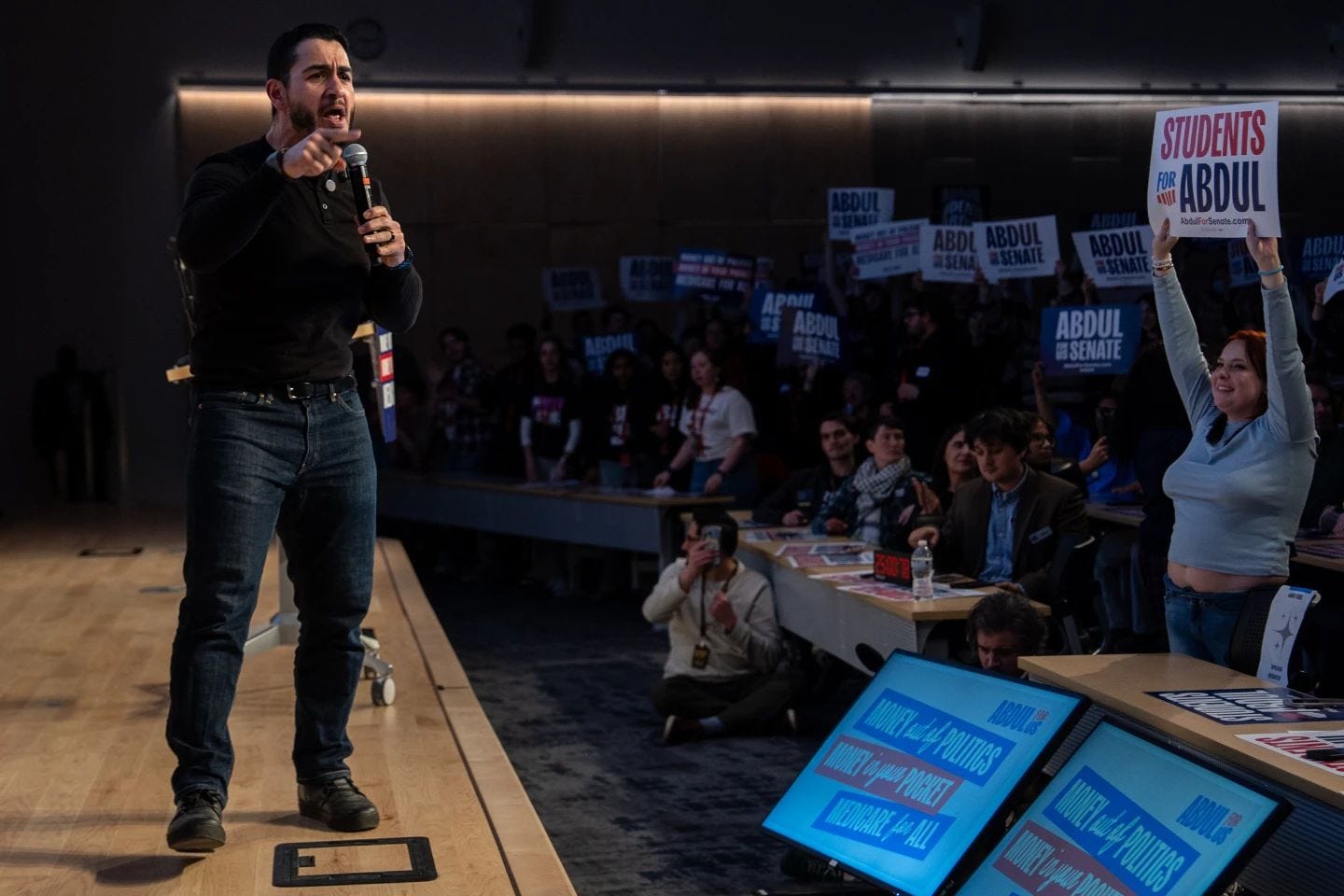
🎙️ Ann Arbor looked less like a stop and more like a signal. The University of Michigan-Ann Arbor rally for physician-turned-politician Dr. Abdul El-Sayed drew the kind of student energy Democrats claim they can reactivate. Desks were pounded. Feet were stomped. Debbie Dingell watched from the back like a veteran mechanic listening for a familiar engine noise. El-Sayed shared the stage orbit with streamer Hasan Piker, whose online reach matters because traditional party infrastructure no longer monopolizes youth attention. Rashida Tlaib was there too, a reminder that Michigan’s political fault lines now run through Gaza, class, and identity all at once. The event mattered because it suggested young voters are not absent. They are selective. They respond when politics sounds less focus-grouped and more morally legible. That is also why the backlash has been so sharp. Arab American advocates quoted elsewhere have argued that attacks on El-Sayed and Piker reflect anti-Arab bias and Islamophobia more than honest disagreement. Critics of Piker, by contrast, have cast him as inflammatory and antisemitic. The clash is not really about one streamer. It is about who gets to define moral seriousness inside the Democratic coalition before the midterms. One widely circulated clip added fuel: in it, controversial Free Press reporter Olivia Reingold asks El-Sayed whether Israel has a right to exist as a Jewish state. El-Sayed asks what she means by Jewish state; she is unable to, and says he will not answer a question built on an undefined term. The exchange traveled because it distilled the broader fight, with one side trying to force a litmus test and the other refusing the frame itself.
Source: Associated Press (AP)
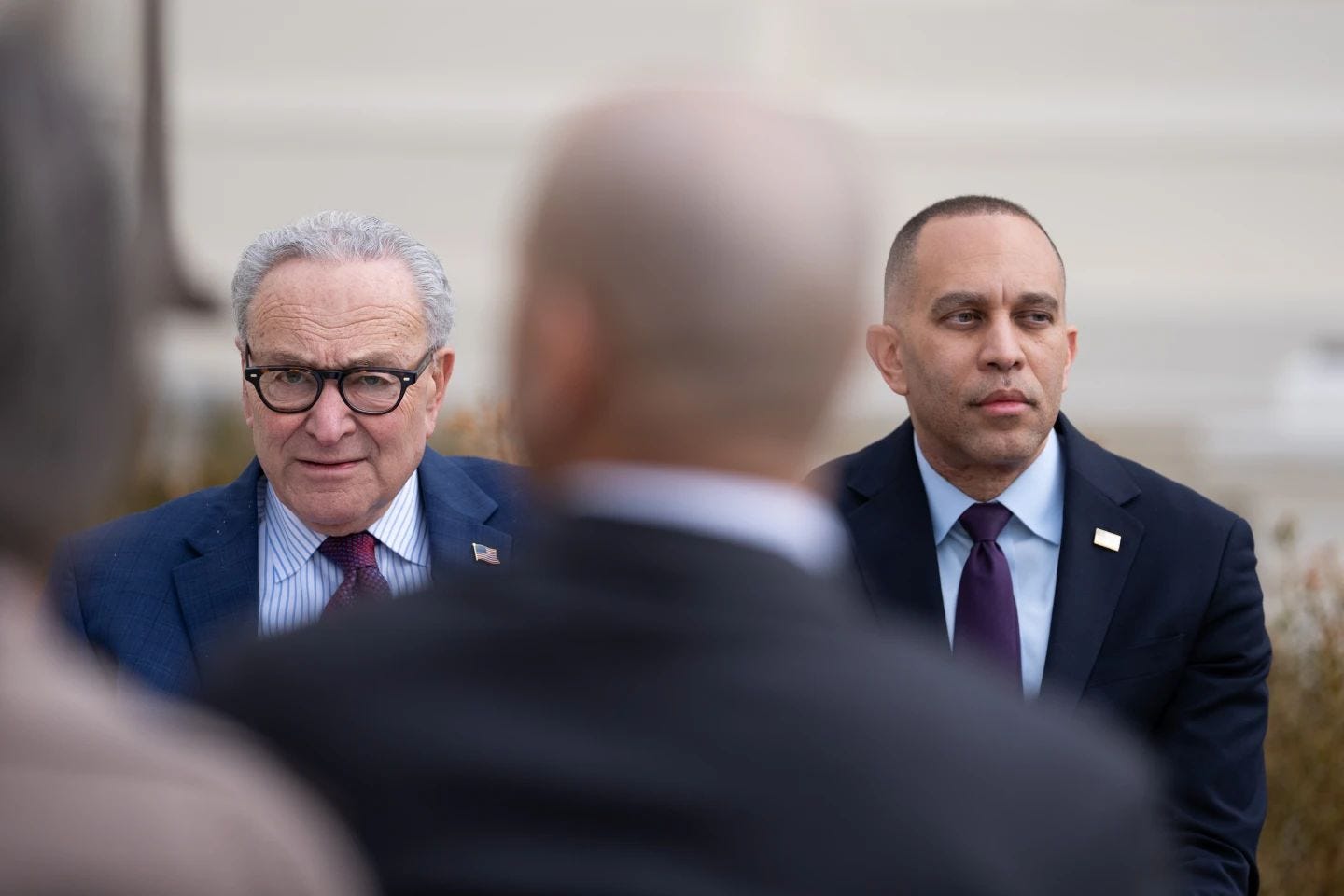
🏛️ Democrats are talking removal more openly, but not more simply. Democratic rhetoric around President Trump has hardened after his threats tied to Iran. The basic argument is constitutional. A president, critics say, should not be able to widen a war while bypassing Congress. That is why Chuck Schumer and Hakeem Jeffries are pushing war-powers legislation rather than leaping immediately into impeachment. They know arithmetic still governs outrage. As long as Republicans control Congress, removal is not a live procedural path. Even so, the tone has shifted. The question is no longer whether Democrats are furious. It is whether fury should be translated into symbolic confrontation or a narrower institutional fight over war authority. Al Green already tested the impeachment route in June. One hundred twenty-eight Democrats joined every Republican to table that resolution. That vote was less a show of unity than a measure of how many Democrats still fear overreach more than underreaction. Now the language is bolder. Jeffries says Democrats will keep pressing Republicans to put patriotic duty over party loyalty. The White House says Trump’s rhetoric is effective. The near-term outcome will likely be legislative theater, not expulsion. But theater matters when it previews the script. Democrats are increasingly willing to say removal out loud, even if they still expect Congress to answer with a shrug.
🗂️ MISC

Source: Associated Press (AP)
🤑 The PCE number stayed hot before the war even reached the gas pump. The Bureau of Economic Analysis (BEA) is the Commerce Department agency that tracks national income, spending, and related macro data. Its February release shows why investors keep watching the Federal Reserve’s preferred inflation gauge with a clenched jaw. Personal consumption expenditures, or PCE, measure what households spend across goods and services. Disposable personal income, or DPI, measures after-tax income available to spend or save. In February, BEA says personal income fell $18.2B, or 0.1%. DPI fell $18.3B, also 0.1%. PCE, however, rose $103.2B, or 0.5%. Personal outlays rose $106.5B. Personal saving came in at $931.5B, with the saving rate at 4.0%. The BEA table shows current-dollar PCE up 0.5% in February, real PCE up just 0.1%, and the headline PCE price index up 0.4%. Core PCE, excluding food and energy, also rose 0.4%. Separate reporting says headline PCE was up 2.8% year over year and core was up 3.0%, still above the Fed’s target comfort zone. Real spending barely increased, and incomes slipped for the first time since October, and the significance is straightforward: inflation was stubborn before the Iran war’s gasoline spike could even enter the monthly data, leaving March and April prints looking less like a scare and more like an amplifier.
Source: Associated Press (AP)
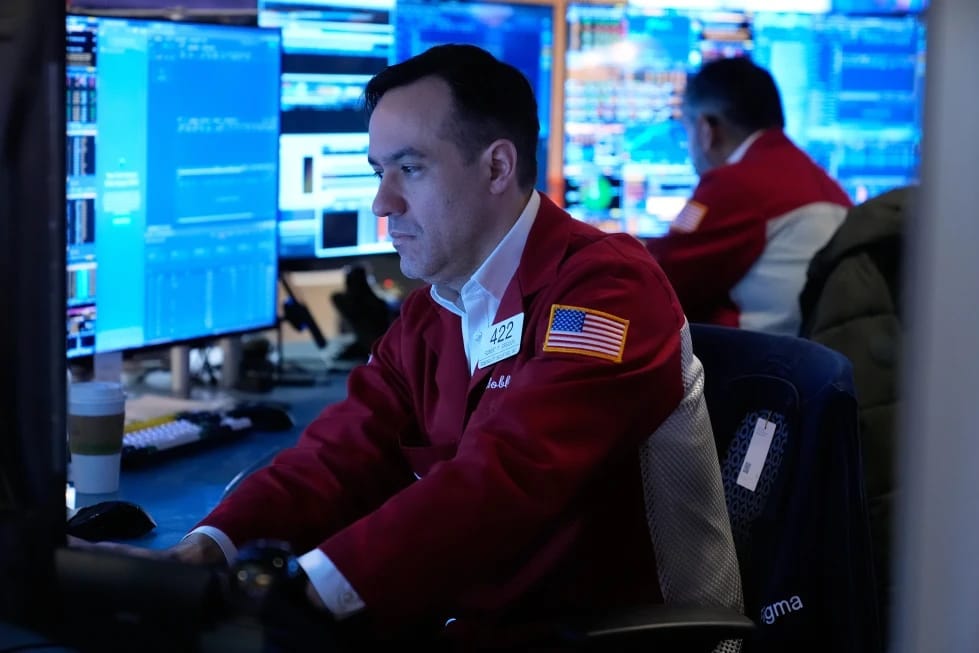
📈 The market is trading relief, but not yet conviction. American stocks swung higher Thursday after opening with more caution than confidence. The Standard and Poor’s (S&P) 500 rose 0.5% by midday after initially slipping. The Dow gained about 337 points, or 0.7%. The Nasdaq was up roughly 0.7%. Oil also stayed elevated even as its early surge cooled. American crude was up 3.2% to about $97.43 a barrel after briefly topping $103. Brent was up 1.4% to about $96.01. Those are not panic highs, but they are still expensive enough to keep transport, margin, and inflation conversations alive. The investor message is mixed. First, ceasefire hopes are real enough to support risk appetite. Second, Lebanon remains the obvious spoiler. Israel’s movement toward direct negotiations with Lebanon helped steady nerves because it implied that the already-fragile two-week Iran ceasefire might not collapse entirely nor immediately. Stock leadership also mattered. Constellation Brands rose 7.7% on strong earnings. CoreWeave gained 5.3% after announcing a $21B deal with Meta Platforms. Simply Good Foods fell 19.4% on weak revenue. Treasury yields moved around after slightly hotter inflation data and discouraging jobless claims. For now, the signal is clear: allocation still favors nimble risk-taking, but conviction should remain conditional until shipping, oil, and inflation all stop negotiating with one another in real time.
👀 ICMYI
Philippines opens key coast guard base in disputed South China Sea.
Peru heads into 35-candidate presidential free-for-all poll on Sunday.
Disgraced NYPD sergeant Duran sentenced in fatal cooler crash case.
Despite rhetoric West Virginia electric utility bills now top mortgages.
Kara Swisher’s new CNN series examines the business of longevity.
Scheffler, McIlroy, and DeChambeau headline star-studded Masters.
Federal appeals judges questioned Sean Combs four-year sentence.
Husband arrested after wife vanished from Bahamas boat denies guilt.
US Army veteran accused of leaking classified elite commando secrets.
President Trump again seeks to zero out tribal college federal funding.
🗳️ SURVEY
Help better understand our audience. Take this 1-minute survey here so we can provide our community with the best content, news, and stories that matter to you most.
Free daily news, without all the ads. Inform your inbox.
www.perennialmillennial.com/forms/14078647-763f-4fc6-944b-24f4a9ea34db
🗣️ SHARE PM DAILY
✍️ FEEDBACK
Feel free to reply with your feedback. PM reads and responds to every email. :)
That’s all for today!
Much obliged and many thanks for reading and sharing today’s newsletter.
See you tomorrow!