Greetings! Happy Autumnal Equinox to those celebrating.
Let’s get into today’s top stories.
Forwarded this email? Subscribe to PM Daily below:
SPONSORED SECTION
Sponsor PM Daily! Unlike other free daily newsletters, PM’s ad model works differently: 1. one single sponsor slot per issue; 2. 100% share of voice (SOV) guaranteed; 3. higher return on ad spend (ROAS) from your first placement.
No-brainer, little risk, high upside. Q3 slots are filling up quickly! Reach our rapidly scaling, high-intent, vetted premium audience by replying to this email right now.
🌎 GLOBAL NEWS
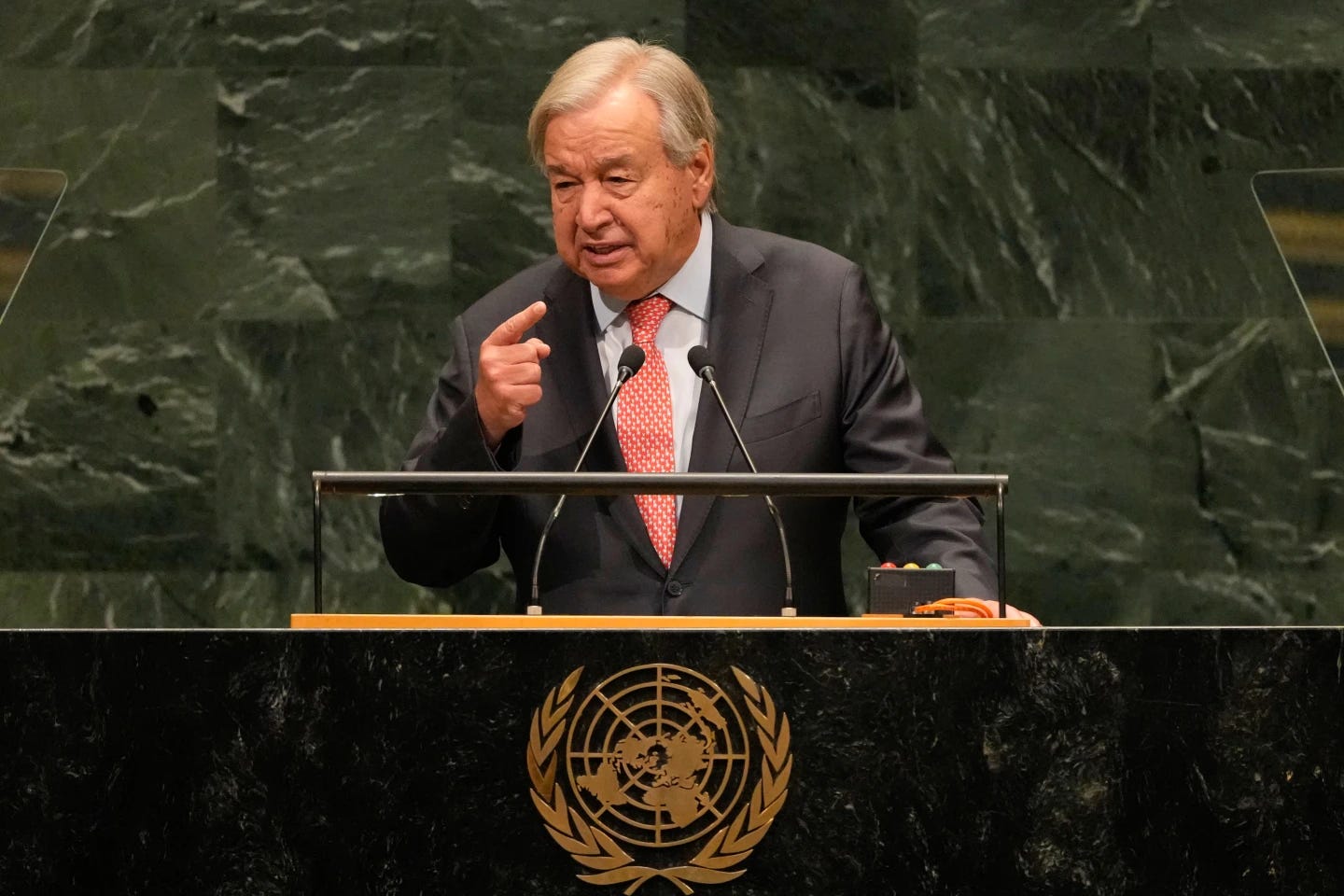
🇺🇳 Guterres urges interdependence as United Nations summit opens. United Nations Secretary-General Antonio Guterres opened the 81st General Assembly with a final appeal for a “world built on interdependence” as wars, climate shocks, inequality and AI strain the international system. Guterres leaves office at year’s end after two terms. He warned that global fault lines are widening while institutions struggle to keep pace. Roughly 130 heads of state and government are converging on New York for the annual summit. President Trump used his address to defend American actions against Iran and said he faces a major decision on whether to renew attacks. Brazilian President Luiz Inácio Lula da Silva urged stronger responses to global conflict while warning against interference in other nations’ internal affairs. Leaders are also confronting wars in Ukraine, Gaza, Sudan, Congo and Myanmar. Economic turbulence and disrupted energy routes add another layer of pressure. Climate change remains central as extreme weather intensifies across regions. AI has also moved closer to the diplomatic foreground as governments debate safeguards for increasingly capable systems. The United Nations itself faces a funding crunch. American arrears have left the organization’s finances in rocky shape. The Security Council itself faces calls for reform. Guterres has repeatedly argued that cooperation must survive intensifying great-power competition. His final General Assembly address sharpened that message into a warning against fragmentation and transactional diplomacy. The gathering now tests whether 193 member states can translate shared anxiety into coordinated action. The problems are global, but the political appetite for durable collective solutions remains deeply uncertain.
🌍 Diplomats describe a world in turmoil at United Nations gathering. Diplomats arriving for the United Nations General Assembly are describing a world that is messier, more volatile and less predictable than it was a year ago. Wars in Europe and the Middle East are escalating rather than receding. Russia’s invasion of Ukraine has entered a fifth year with intensified attacks and little diplomatic progress. The Iran war has widened across the region and disrupted a critical maritime corridor. Earlier this year, an American operation removed Venezuelan leader Nicolás Maduro from power. Iran also experienced a deadly crackdown after mass demonstrations challenged its theocratic government. Public-health fears resurfaced after Ebola outbreaks in the Democratic Republic of the Congo and Uganda. Flash floods in Nepal and Tibet underscored the mounting human costs of climate change. The global economy, meanwhile, is adjusting to war, shifting trade relationships and a changing balance of power. United Nations Secretary-General Antonio Guterres has called the moment an “era of deep uncertainty.” He argues that institutions must evolve as power shifts. Current and former officials have voiced doubts about whether the multilateral system can keep pace. The United Nations still brings nearly every government into one room, but consensus has become harder to manufacture. The annual meeting therefore opens with diplomacy under unusually heavy and immediate strain. Leaders are not arriving to debate a single crisis but to manage several overlapping ones. The week will measure whether the world’s central diplomatic forum can still produce common ground when the world itself is fragmenting.
🇺🇸 LOCAL NEWS
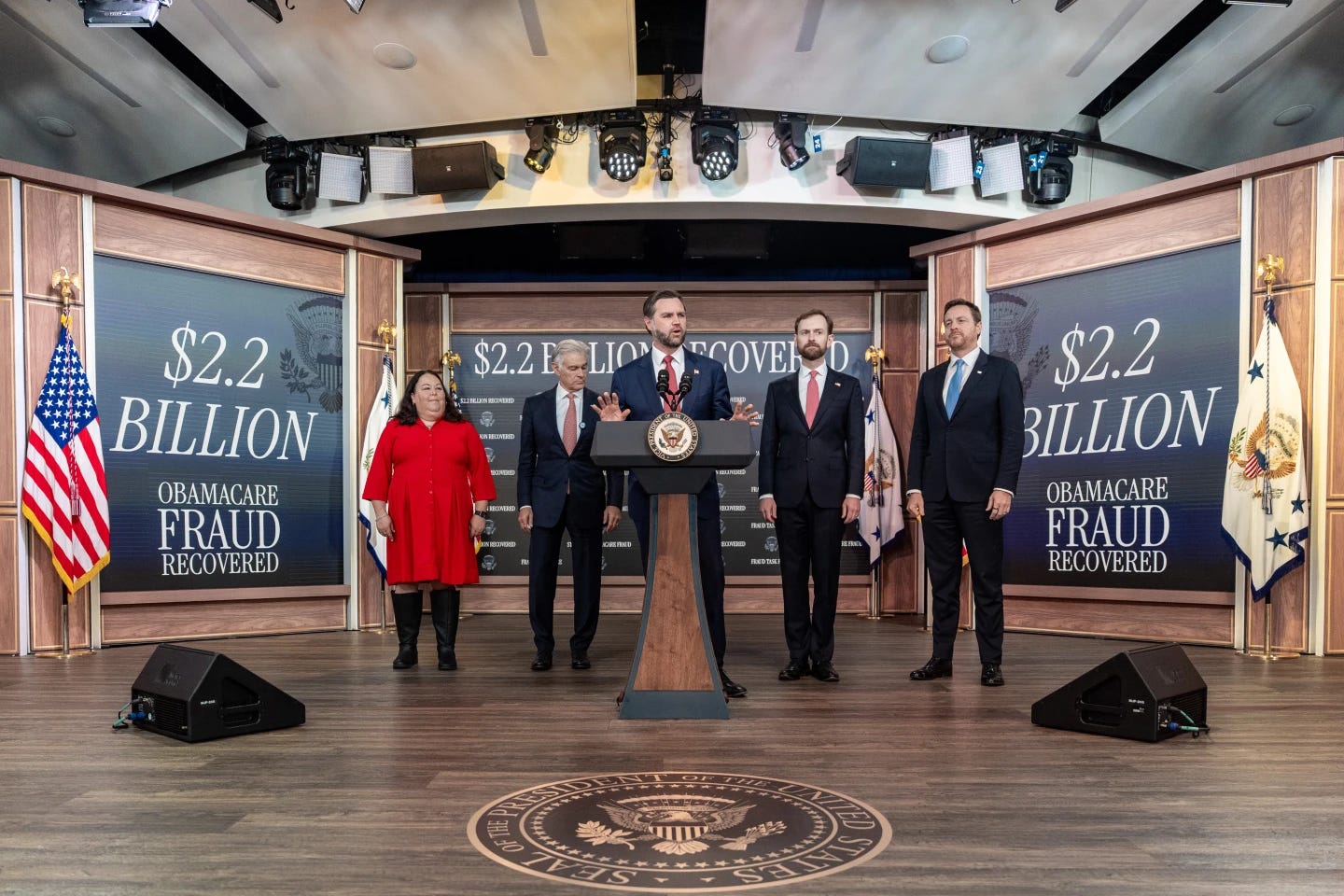
🩺 Administration moves to remove 760K Affordable Care Act enrollees. President Trump’s administration says it will remove about 760K people from Affordable Care Act marketplaces after alleging that some enrollments were fraudulent or tied to people who do not exist. Vice President JD Vance said roughly 315K enrollments covering those 760K people are being canceled. He said the move would save about $2.2B in subsidy payments. Another 419K enrollments will face additional eligibility verification. The administration also announced a six-month pause on new agents or brokers enrolling people in marketplace coverage. Officials say brokers account for a disproportionate share of the suspected fraud they identified. About 19.2M Americans were actively enrolled in marketplace plans in early 2026. Vance leads an administration task force focused on fraud. Centers for Medicare & Medicaid Services Administrator Mehmet Oz joined him for the announcement. The Government Accountability Office has previously identified vulnerabilities in marketplace enrollment controls. In covert testing, nearly all 24 fictitious applicants created by investigators obtained subsidized coverage. That test demonstrated a fraud risk but did not establish the scale of improper enrollment nationwide. The removals come as healthcare affordability remains politically salient before the midterms. Premiums have risen sharply for many customers after enhanced subsidies expired. Democratic lawmakers criticized the administration’s action as another barrier to obtaining coverage. Administration officials say the changes are intended to protect taxpayers and ensure federal subsidies reach only qualified enrollees. The dispute now turns on how accurately the government distinguishes fraudulent or invalid enrollments from legitimate health coverage.

🏥 Hospitals strike deals restricting care for transgender minors. At least six major hospital systems have reached Justice Department agreements to stop providing puberty blockers, hormones or gender-affirming surgeries to patients under 19. The agreements also require payments to the federal government. New York University Langone Hospitals agreed to pay $8.5M, while University of Pittsburgh Medical Center agreed to pay $950K. Similar settlements have been reached with Cleveland Clinic, Connecticut Children’s Hospital, Mount Sinai Health System and Texas Children’s Hospital. None of the hospitals admitted wrongdoing. The agreements end federal investigations into care previously provided. They also remove the immediate risk that hospitals would have to surrender patient records sought through federal subpoenas. Some providers agreed to help cover medical costs for children who later seek to reverse prior treatments. President Trump has made restricting gender-affirming care for minors a major administration policy. His administration also barred federal Medicaid funding from covering such treatment. Most major American medical organizations, including the American Medical Association and American Academy of Pediatrics, support keeping gender-affirming care available. At least 27 states restrict or prohibit such care for minors. More than two dozen hospitals and clinics in states without bans have also stopped offering it since last year. LGBTQ+ advocates argue the government is using federal power to pressure providers out of medically supported care. The hospitals say pediatric mental-health services for transgender patients will continue. Legal fights over subpoenas, funding and the federal government’s authority remain active. The settlements narrow treatment options without resolving the broader medical and constitutional disputes.
🗂️ MISC
🧠 Alibaba unveils powerful AI chip and massive model plans. Alibaba Group ($BABA) unveiled a new AI chip and plans for dramatically larger models as China accelerates its competition with American technology leaders. CEO Eddie Wu introduced the Zhenwu V900 at the company’s flagship conference in Hangzhou. Alibaba calls it China’s most powerful AI chip. Wu said it delivers three times the performance of the previous Zhenwu M890. The chips are designed for both model training and inference inside Alibaba data centers and its cloud business. Alibaba also plans to train a model with between 5T and 10T parameters. Its current Qwen3.8-Max model has 2.4T parameters. Chinese rival Moonshot says its Kimi K3 open model has 2.8T. Alibaba is simultaneously preparing a massive expansion of its computing infrastructure. The company expects more than 20 gigawatts of computing capacity by 2032. It says rapidly rising AI demand is already straining data-center supply chains. Chinese firms are pushing for greater technological self-reliance as American-led export restrictions limit access to advanced chips and chipmaking equipment. Huawei recently unveiled new chip systems of its own. Chinese-designed accelerators are gaining ground even as Nvidia ($NVDA) hardware remains important for frontier training. Open Chinese models are also spreading globally because they can cost less than leading closed systems. Wu compared AI’s trajectory to the Industrial Revolution. He predicted machines could eventually produce more than 1,000 times humanity’s combined “thinking” output. The announcement lands just before Chinese President Xi Jinping meets President Trump, with AI, trade and tariffs expected on the agenda.
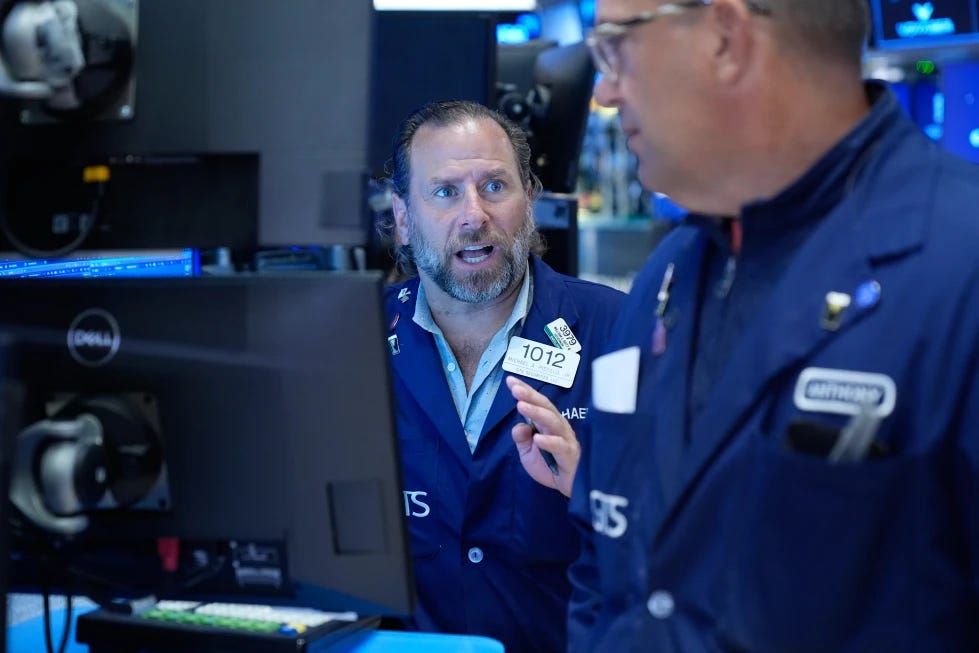
📈 Wall Street stays near record as Brent drops below $100. American stocks finished nearly flat as cheaper oil relieved inflation pressure while investors weighed mixed corporate results and high interest rates. The Standard & Poor’s 500 (S&P 500) slipped less than 0.1% to 7,764.64. It remained just 0.4% below last month’s record. The Dow Jones Industrial Average fell 185 points, or 0.4%. The Nasdaq composite rose 0.5% to a record 27,244.28. Brent crude briefly fell below $98 before settling at $99.25 per barrel, down 1.1%. Oil had approached $110 last week and traded near $72 before the Iran war. Lower energy prices can ease pressure on inflation, shipping costs and household budgets. The 10-year Treasury yield edged down to 4.95% from 4.96%. AutoZone ($AZO) gained 3.3% after reporting stronger quarterly profit than analysts expected despite weaker revenue. Thor Industries ($THO) rose 5.5% after also beating profit expectations, even as its CEO cited expensive fuel, high rates and inflation. Energy shares weakened with crude. ConocoPhillips ($COP) fell 1.8%. JPMorgan Chase ($JPM) dropped 3.4% as banks remained under pressure after the Federal Reserve’s first rate increase in three years. Analysts expect S&P 500 companies to report nearly 29% year-over-year profit growth for the third quarter, according to FactSet. That would mark a third consecutive quarter above 25%. Hong Kong and Shanghai stocks also rose after Alibaba unveiled new AI chip and model technology. Markets remain near records, but expensive money, volatile oil and rich AI valuations keep the margin for disappointment unusually narrow.
👀 ICMYI
1. Missouri map fight heads toward another Supreme Court showdown.
2. Media expert criticizes White House bans on three news outlets.
3. New York and California sue over canceled offshore wind projects.
4. Nolan Wells’ family challenges grand jury findings in his death.
5. NFL players increasingly favor natural grass over artificial turf.
6. Giants continue evaluating quarterback Jaxson Dart’s knee injury.
7. Category 5 Hurricane Polo churns off Mexico’s Pacific coast.
8. California grape growers struggle as American wine demand falls.
9. Google faces €403M EU fine over mishandled location data.
10. Bill Gates backs smarter AI and representative language data.
🗣️ SHARE PM DAILY
Please share PM Daily with a friend!
✍️ FEEDBACK
Feel free to reply with your candid feedback.
PM reads and responds to every single email.
That’s all for today! Hope you liked this issue.
Much obliged and many thanks for reading.
See you tomorrow, same newsletter. Onward!